While a resident of New York City Richard Modiano became active in the literary community connected to the Poetry Project where he came to know Gregory Corso, Allen Ginsberg, Anne Waldman, William S. Burroughs and Ted Berrigan. In 2001 he was a programmer at Beyond Baroque Literary/Arts Center, joined the Board of Trustees in 2006, and from 2010 to 2019, he served as Executive Director. The Huffington Post named him as one of 200 people doing the most to promote poetry in the United States. Modiano is the winner of the 2022 Joe Hill Prize for labor poetry and is a Push Cart Prize nominee.
Richard, thank you for agreeing to this interview. You’re a Los Angeles native but went to Hawai’i for college. What was the reason?
I went to the University of Hawai’i because I wanted to study Pacific anthropology. My motive was hippie-utopian. I read Aldous Huxley’s Island where he creates a practical utopian society based on already existing social formations and science brought together in a fictitious Pacific island. I thought that by becoming an anthropologist I would have access to ancient wisdom that could be used to create a new way of living.
As a New York resident, you were active in The Poetry Project, which is where you came to know such luminaries as Gregory Corso, Allen Ginsberg, Anne Waldman, William S. Burroughs and Ted Berrigan. What are some of your memories of those days and people?
The Poetry Project is a pivotal institution in the New York City literary scene that founded in 1966 at St. Mark’s Church-in-the-Bowery, and it was 9 years old I first went to the Poetry Project for the 1975 New Year’s Day Poetry Reading Marathon. It emerged during a time of vibrant cultural and political upheaval in the United States, particularly in the East Village, where artists, musicians, and writers were converging to create new forms of expression. The Poetry Project became a central hub for the avant-garde poetry movement, providing a space for readings, performances, and the exchange of ideas.
The inception of the Poetry Project was influenced by the desire to create a space where poets could share their work outside the constraints of academia or mainstream publishing. The founding members included key figures like Paul Blackburn, Ed Sanders, Anne Waldman, and Allen Ginsberg, who were all associated with the burgeoning countercultural movements of the time.
I went to readings and workshops there during the time I lived in New York City. As for Allen Ginsberg, it seems that there is an Allen Ginsberg for every era. I first knew of Allen Ginsberg as a spokesman for the hippies and elder statesman of the New Left before I knew of him as a poet, circa 1966 or ‘67. I believe I read a poem of his accompanied by an interview in the Los Angles Free Press sometime in 1968, probably after the Democratic Convention in Chicago, but I didn’t really know much about Ginsberg until I read an in-depth interview with him in the April 1969 issue of Playboy magazine. I didn’t read Howl and Other Poems until July 1969. After that I bought his other books and read his new works whenever I chanced to see them.
I moved to New York City in 1974 and on April 17, 1975, I attended a reading at Columbia University’s MacMillan Auditorium called “Another Night at Columbia,” a reference to a notorious 1959 reading at the same place that was boycotted by the English Department and written about by Midge Dichter as “That Other Night at Columbia.” Although I arrived early, I didn’t enter the auditorium until the last minute because I was waiting for a friend who didn’t show up. By then there were no more seats left and the overflow crowd, rather than be turned away, was invited to sit on the stage with the poets by Ginsberg himself. This gave me a chance to approach him after the reading.
I introduced myself as a friend of Marc Olmsted and Ginsberg gave me his complete attention even though a media scene was swirling around him and other people were clamoring for his attention. We exchanged a few words about Marc, recent poetry, Buddhist practice and the IWW (I was and am a Wobbly and was wearing my IWW pin.) I asked him about his next book, and he told me it would be a collection of his original songs (published as First Blues,) and with that I left him.
Subsequently I met Ginsberg three or four times a year in New York City, San Francisco, Boulder Colorado or Los Angeles at poetry readings, political actions, Buddhist teachings, parties and book signings until October 1996 about six months before his death. On most occasions we only exchanged a few words, but I did talk to him at length in San Francisco in November 1977, in Boulder in July 1978, in Los Angeles in April 1982, in New York City in December 1988 and in San Francisco in October 1996.
I met Gregory Corso on the street in October of 1974 in front of a used bookstore in the Village where I was going through a bin outside the store and had laid aside two issues of Evergreen Review, one of which had a poem by Corso. I looked up and saw Gregory who noticed me staring at him and said, “There’s no flies on me, man.” I told him I just saw his poem in Evergreen Review #16 whereupon he paged through the zine and made a few pithy comments. After that I saw him from time to time at readings in New York, San Francisco and Boulder. I got to know him best in the 1980s where he visited the apartment I shared with Vincent Zangrillo who was close to Gregory.
As the editor and publisher of The Junk Merchants 2: A Literary Tribute to William S. Burroughs, I’m particularly intrigued by your relationship with Burroughs. What was he like as a person?
In 1977 I recorded live sound for Marc Olmsted’s film Burroughs on Bowery and afterward we had lunch with his companion James Grauerholz at Phoebe’s where Burroughs talked about the possibilities of cinema (he’d already collaborated on movies with Antony Balch) and picked up on a giant mural across the street of “Squeaky” Fromme, former Manson Family member who’d recently tried to shoot Gerald Ford.
Burroughs was reserved over lunch, but when we screened the film for him in Boulder the following year, he was gregarious and friendly. After the screening he invited us over to his apartment for a drink where he talked about firearms and agreed to do a scene in the movie that Marc was making at the time, American Mutant. When he was on his own turf, Burroughs was extraverted, but in most public situations (excluding a couple of parties) he was quite and observant.
In your conversation last year with Iris Berry on Poetry LA, you spoke of the history of outlaw/street poets beginning with Francois Villon. These poets are also known as les poets maudit and include Charles Baudelaire, Arthur Rimbaud, Paul Verlaine, et al. What is attractive about these poets for you?
These poets came from the street rather than from a literary establishment and wrote in the language of the demos, and I would include worker-poets like Sara Ogan Gunning and Dan Denton. Street poets are individuals who cultivate their poetic craft outside formal educational systems, driven by an innate passion for language and expression. These poets typically draw inspiration from personal experiences, the natural world, and the literature they encounter, developing unique voices that resonate with authenticity and raw emotion. Without the constraints of academic expectations, street poets experiment with unconventional forms and styles, allowing their creativity to flourish in unexpected ways. Their work is a testament to the power of self-directed learning and the profound impact of poetry as a means of personal and artistic exploration.
How do you see Burroughs within the framework of outlaw poetry, given that he was the scion of the Burroughs fortune? Who do you see today as embodying the Burroughs outlaw spirit?
Burroughs was not really the scion of the Burroughs adding machine fortune. His father sold his shares in the company in 1929 just before the stock market crash. So Burroughs enjoyed the comfort of a solid middle class life in his youth, but his outsider status as a homosexual in 1930s America and later as a heroin addict in the 1940s and ‘50s puts his work in the category of outlaw writing.
The Junk Merchants features a piece and has an Introduction by Billy Martin, aka Poppy Z. Brite. Poppy was one of numerous participants in the New Orleans Insomnification event hosted by Ron Whitehead, who contributed his love poem to and an interview with Burroughs. Both Ron and Billy were also friends with the late Hunter Thompson.
Could you give me your thoughts on Ron, Hunter and Billy’s place in the Burroughsian lineage?
Billy Martin’s writing is rich in sensory detail, often vividly describing the textures, tastes, and smells of the settings and characters that creates a deeply immersive and atmospheric reading experience. Also, Martin frequently explores subcultures, especially those on the fringes of society — the punk, goth, and LGBTQ+ communities — which are portrayed with nuance and empathy. I would say that puts Martin’s writing in the Borroughsian lineage, although Burroughs created imaginary subcultures, pirates, the Wild Boys, a bestiary of fantastic life forms (the Mugwumps, etc.)
While Thompson and Burroughs share certain stylistic elements, particularly their stream-of-consciousness approach and satirical critiques of society, their narratives, tones, and thematic focuses are fairly distinct in my view. Thompson’s work is more grounded in the real world, albeit through a distorted lens, while Burroughs delves into the surreal and the abstract, often pushing the boundaries of narrative structure itself.
Could you speak about Ron Whitehead and his legacy, as he has just done the Last Insomnification and, while thoroughly vibrant still, appears to be passing on the mantle to a new generation of poets, included in New Generation Beats 2024, myself included. Some of the famous names in the book, representing both the past, the present and the future, are Anne Waldman, Bob Dylan, Gary Snyder and Johnny Depp, who is not only an actor but a musician and a scholar of literature. What are some of your impressions of these distinguished literary and cultural figures?
Anne Waldman, Bob Dylan, Gary Snyder, and Johnny Depp, though distinguished in different artistic realms, share a deep connection to the countercultural movements that shaped American culture in the 20th century. Anne Waldman, a prominent poet and activist, was a leading figure in the Beat Generation and co-founded the Jack Kerouac School of Disembodied Poetics. Bob Dylan became the voice of the 1960s counterculture, blending folk, rock, and lyrical poetry to challenge societal norms. Gary Snyder was also part of the Beat Generation, and his work often explores themes of nature, spirituality, and the human connection to the environment. Johnny Depp often embodies the spirit of rebellion and nonconformity in his performances, drawing from the same well of countercultural inspiration. What they all have in common is a profound commitment to pushing the boundaries of their respective art forms and challenging mainstream conventions, each contributing to a broader dialogue about society, individuality, and creative expression.
How do you see Beat Poetry evolving as we reach the first quarter of the 21st Century? What are some of the most important issues for newer poets such as myself to address?
As we reach the first quarter of the 21st century, Beat Poetry continues to evolve, reflecting the complexities of modern life while maintaining its core ethos of rebellion, spontaneity, and a deep yearning for authenticity. The movement’s spirit thrives in contemporary voices that grapple with issues like social justice, climate change, identity, and the relentless pace of technology. For newer poets like yourself, it’s crucial to explore the intersections of personal experience with these broader societal concerns. By doing so, you can contribute to a tradition that is not just reflective but also transformative, pushing the boundaries of both form and content.
How do you feel Ron Whitehead has influenced poetry and culture?
Ron Whitehead has been a significant figure in the Beat and outlaw poetry movements. His work often explores themes of rebellion, spirituality, and the human experience, drawing on influences ranging from the Beat Generation to Southern Gothic literature. Whitehead’s legacy is marked by his tireless efforts to support and promote independent artists, his prolific body of work, and his commitment to challenging societal norms through the power of words. He has inspired countless poets and writers to embracetheir own voices, thereby keeping the legacy of street poetry vital.
Could you tell me about your experiences as a member of the board of directors for Valley Contemporary Poets?
I was invited to join VCP’s board of directors by Amelie Frank, who was my entrée to the Los Angles poetry community after I moved back to L.A. from NYC. Established in 1980 by Nan Hunt, VCP held monthly readings on Sundays at the community room of Union Bank in Canoga Park when I joined in 1994. The series was (and still is) vibrant, eclectic and diverse. The VCP series lives on today under the capable direction of Teresa Mei Chuc, Elizabeth Iannaci, James Evert Jones, and Bryn Wickerd.
You are the main host for Poets Café on KPFK. What have been some of the most memorable guests and episodes of that program?
To be accurate, I’m one of several rotating hosts of Poets Café and not the main host. My two part conversation with Bill Mohr about the history of Los Angles poetry was informative – Bill is an excellent poet and a non pariel authority on Los Angeles poetry (see his history Hold Outs.) All of the interviews I’ve done were interesting and informative to me, but I especially enjoyed talking to K.R. Morrison in another two-part interview who draws on ancient feminine traditions for inspiration and gives voice to the experience of being a woman in the contemporary world.
What is your poetics?
I follow “first thought, best thought,” a phrase disseminated by Allen Ginsberg who got it from his Buddhist teacher Chogyam Trungpa. It encapsulates the raw, unfiltered expression at the heart of spontaneous poetry, favoring the immediacy of the mind’s first impressions, embracing the chaotic and the imperfect, valuing authenticity over polish. In this poetics, the initial surge of inspiration is a direct line to truth, untainted by the self-censorship that can arise in the process of revision. The intention is to create poetry that is alive with the energy of the moment, capturing the fleeting essence of thought before it is lost to overthinking.
What advice would you give to up-and-coming students of the art and craft of poetry?
For up-and-coming students of the art and craft of poetry, my advice would be to embrace curiosity and patience. Read widely, not just poetry but also fiction, essays, and anything that ignites your imagination. Pay attention to the world around you; inspiration often lies in the ordinary moments. Write regularly, even when it feels difficult, and don’t be afraid to experiment with form, voice, and language. Seek feedback from others but trust your own instincts. Finally, remember that poetry is a lifelong journey — nurture your passion and allow your voice to evolve naturally over time.
Could you speak to how your socialist politics have inspired your art?
The socialist imagination stands for the radical freedom of the individual, the meeting ground of materialist and idealist heritages, the intersections of unconscious desire and conscious thought, seeing through the eyes of women, the vital poetic spirit of non-Western thought and ceremonies, and dreaming the social revolution. Above all the socialist imagination extols the practice of poetry, poetry as audacity and insubordination, a source and method of knowledge, a model for a better society, an adventure and experience that makes all the difference in the world. “Change the world,” said Marx: “Change Life,” said Rimbaud; ‘for us,” said Andre Breton, “these two projects are the same.”
In 2001 you were a programmer at Beyond Baroque Literary/Arts Center. You joined the Board of Trustees in 2006, and from 2010 to 2019, served as Executive Director. In that time you produced and curated hundreds of literary events, and with Henry Morro, Suzanne Lummis and Liz Camfiord co-founded and named Beyond Baroque Books’ sub-imprint The Pacific Coast Poetry Series.
You and Ellyn Maybe have been very generous with me in helping me grow as a poet, and Ellyn encouraged me to write and publish The Death Jazz, which I read from at Beyond Baroque in 2011.
What was it like playing a crucial role with Beyond Baroque and creating all these events? What were some of the greatest challenges as well as greatest rewards of doing so?
When I took over as the director of Beyond Baroque Literary/Arts Center in 2010, I faced several challenges: BB had struggled with financial issues and I had to address budget shortfalls and find ways to secure funding to keep the organization afloat.
The center needed revitalization to maintain its relevance and attract a new generation of artists and audiences. I worked on updating programming and outreach to bring fresh energy to the organization while staying true to its literary and artistic roots.
Engaging the local community and building partnerships with other cultural institutions were crucial, so I focused on strengthening relationships within the community and expanding Beyond Baroque’s influence and impact.
Balancing the need for financial support with the commitment to artistic integrity was a delicate task. I had to navigate the pressures of commercial viability while preserving the center’s role as a space for experimental and avant-garde art.
You were elected Vice President of the California State Poetry Society. Could you please tell me more about that organization and what it does?
The California State Poetry Society (CSPS) is a nonprofit organization dedicated to promoting poetry and supporting poets across California. CSPS hosts various events and contests, provides publication opportunities, and offer workshops and resources for poets. We also work to foster a sense of community among poets and poetry enthusiasts. The society often organizes readings, poetry slams, and other activities to engage people with poetry and celebrate the diverse voices within the poetry community.
The Huffington Post named you as one of 200 people doing the most to promote poetry in the United States. How do you feel about that honor?
I’ll answer that by quoting Emil Cioran: “The further one advances into age, the more one runs after honors. Perhaps, in fact, vanity is never more active than on the brink of the grave. One clings to trifles in order not to realize what they conceal, one deceives nothingness by something even more null and void.”
In 2022 the Los Angeles-Long Beach Harbor Labor Coalition awarded you the Joe Hill Prize for labor poetry. Could you speak to labor poetry, its lineage and specific qualities?
Labor poetry is a rich and evocative genre that explores the experiences of working people, often highlighting their struggles, aspirations, and everyday realities. For me, labor poetry serves as a powerful means of documenting and advocating for the working class, providing both a historical record and a call to action. Today, labor poetry continues to evolve, with contemporary poets like Martín Espada and Claudia Rankine addressing labor issues within broader social and political contexts.
Could you speak about your membership in the IWW?
I joined the Industrial Workers of the World (IWW) as part of my commitment to social and economic justice. The IWW, known for its radical approach to labor rights and its emphasis on worker solidarity, aligns with my political and social beliefs. My involvement with the IWW is a reflection of my broader commitment to challenging the status quo and advocating for workers’ rights and social change.
Your collection The Forbidden Lunch Box is published by Punk Hostage Press. Could you tell me about the process of creating that book? How did you decide on that title?
Iris Berry, editor and publisher of Punk Hostage Press in partnership with A. Razor, offered to publish a collection over lunch after an interview for KPFK’s Poets Café. I then assembled what I considered the pieces worth preserving and sent them to S. A. Griffin my editor. The title comes from a poem in the book describing a child’s lunchbox on display in the Hiroshima Peace Museum that was excluded form an exhibit for 50th anniversary of the bombing held at the Smithsonian Institute by order of Congress, hence “forbidden.”
I was intrigued to learn of your friendship with iconic Zoe Tamerlis, street poet, model, musician, actor and author of the screenplay for Bad Lieutenant, starring Harvey Keitel. Her life seems incendiary and tragic. Could you tell me more about that friendship, what she was like as a person, and some of your specific memories of her?
I can’t claim a friendship with Zoe Tamerlis who I knew from anarchist circles on the Lower East Side in the late 1970s. She was a striking figure in that world, known for her unique presence and distinctive style. When I first met her, her hair was dyed black although she was blonde. Zoe had a charismatic and intense presence. I didn’t know about her heroin addiction at the time. She gained attention for her work in the early 1980s, particularly for her role in the film Ms. 45 (1981), where she played a mute seamstress seeking revenge.
Her style and persona were enigmatic and edgy, aligning well with the avant-garde and experimental art scenes of the time. Outside of acting and writing, she was also noted for her involvement in the fashion world, where her avant-garde approach continued to stand out.
What was it like living in New York’s Lower East Side?
I’ll answer with a poem:
On the Lower East Side By Richard Modiano
I didn’t land in NYC’s Lower East Side until I was in my 20s Then home to La Mama, the Nuyorican Poets Cafe, the Grassroots Tavern, the SWP headquarters, 339 Lafayette Street where CORE, the War Resisters League, the Socialist Party and the Free Association were housed under one roof and the NYC General Membership Branch of the IWW at 119 E. 10th Street a couple of doors from St. Mark’s in the Bowery and the Poetry Project Though told that the LES was in an advanced state of disintegration it was so much livelier than anything I had known before that I found it hard to imagine how it could have been better even though the neighborhood was hard hit by crime I had the unparalleled experience of fraternity, life on the LES was the closest thing to living anarchism it has ever been my pleasure to enjoy despite battles with landlords, harassment by cops and muggers The artists who lived there and their allies, old time Bowery bums, sex workers, drug-addicts, winos, gays and lesbians and other outcasts, maintained a vital community based on mutual aid and in which being different was an asset rather than a liability In this society, made of many races and ethnicities, the practice of solidarity and equality was second nature — almost everyone was poor, but no one went hungry, and newcomers had no trouble finding a place to stay On the Lower East Side of the 1970s what mattered most was poetry, freedom, creativity, and having a good time To paraphrase an old aristocrat, “Those who did not live before the gentrification will never know how sweet life was”
***
Originally published in Battery: The Webzine of Extreme Culture
An Interview with Tara Vanflower of Darkwave Legends Lycia
ASJ: Tara, your journey with Lycia began in October 1994. How did you find your way to this particular sound, this blend of the ethereal and the melancholic that defines darkwave?
TVF: Lycia as an entity was well developed prior to my involvement. I was a fan first, and remain a fan of Mike’s to this day. I think the combination/culmination of life experiences and our collective interests just lends itself to darker elements.
ASJ: I’m always curious how artists find their niche, that unique space where their creativity truly flourishes. The band can well be considered one of the foundational and formative bands for both the ‘90s development of Darkwave and later Ethereal Wave. What keeps that “weird drive” inside of you that makes you have to continue?
TVF: I can’t speak for the other members of Lycia, but for myself it’s this sense of losing time. We’re dying every second we’re alive and I feel like I can’t just quit. Fight the dying of the light, and all of that. I don’t do a lot of music these days, and Lycia is on hiatus. It’s a weird feeling not being active musically. I do have other projects, but something always feels like it’s missing when Lycia is asleep.
ASJ: Beyond Lycia, you’ve also carved a distinct path with your solo work, albums like This Womb Like Liquid Honey and My Little Fire-Filled Heart. These albums have been described as experimental, even genre-defying. How does your approach to creating solo music differ from your collaborative work with Lycia? What freedoms or challenges do you find in venturing out on your own, sonically speaking? Do you have any plans to ever record another solo album?
TVF: When I’m working within the Lycia framework I know it’s a collective. So there’s a different sense of priority and obligation, as well as working within other people’s tribal domain. It’s a cohesive, collaborative, vision. There’s sense and order to it, a structure. One can’t throw a wrench into that machine, so to speak. When I wrote my solo albums I threw away any structure. There were no rules. There was no prior framework, no preconceived notions, no obligations. I am also not a traditional musician, so even trying to attempt a structure is pointless for me. I kind of see my music as more just storytelling. As if I’m taking my words and creating an audio movie with them. I want you to hear what I see in my head, much the same way I craft a world through writing. Music is me telling the audio story, writing the soundtrack… writing books is writing the story. All of it is my attempt to convey what’s inside my head, what’s playing on the screen in there.
ASJ: Shifting gears, let’s talk about your writing. You’re the author of the Violet series, among other works. You’ve mentioned that the first book, Violent Violet, stemmed from a vivid dream. Can you elaborate on how that dream translated into the story? What is it about dreams that sparks your creative process?
TVF: I have always been a very vivid dreamer. I’ve gotten a lot of ideas from dreams, even daydreams. The first Violet book was sparked by a really detailed and movie-like dream I had one night. As I was recounting it to Mike I just quit halfway through and decided I would write it instead. No one wants to hear someone else talking in detail about their dreams! But of course as the story unfolded it became much, much larger and more elaborate, but the premise was still there tucked inside. Many snippets in my books/lyrics stem from dreams, or real life events that felt very dreamlike.
ASJ: When did you first start writing? Does your music inspire your writing?
TVF: I started writing as a teenager. I think the first “big thing” I wrote was a Lost Boys fanfic. HAHAHA It was actually several hundred pages long and well thought out. I wish I still had that! But my friend would spend the night in high school and we would write these fun stories back and forth about adventures we wished we had. I had notebooks full of these stories and others that I would write myself, along with poetry. It has always been about escapism in one form or another. Music does not inspire my writing, it’s more the other way around. Except in the case of Lycia, or other collabs. Then the music comes first and inspires the vision.
ASJ: I am always curious to learn about the genesis of a creative work, the spark that ignites the imagination. As you have said, “I love writing and am very passionate and devoted to my characters. My goal is to give them justice, to tell their story in their voice and in the detail they deserve, and to recreate their world as accurately as possible. I want you to know them as well as I know them.”
TVF: These people and their world is very, very real to me. I would not go as far as to say they’re tulpas, but they’re real enough that I feel them around me. Sometimes I picture certain characters pacing back and forth in my mind waiting for me to come and talk to them again because they have so much to show me. Others sit quietly, waiting their turn. Still others awaken new every day and I feel rushed to get to them first. Violet, in particular, is standing with her arms crossed over her chest tapping her foot as we speak. She doesn’t like to be ignored and she has A LOT to say.
ASJ: Many of your stories delve into the darker aspects of human existence, exploring themes of fear, mortality, and the supernatural, particularly vampires. What draws you to these themes? What is it about vampires that fascinates you? Is there a particular allure to these creatures of the night?
TVF: I have been bizarrely cognizant of the march towards death since I was a very small child. Every second is a lost moment and it tortures me if I look too closely at it. I used to sit and make myself cry thinking about all of this stuff when I was a kid. I panic myself often in the middle of the night. The reality that one day I picked my son up for the last time and didn’t even realize it when it happened. That one day will be the last this, that, etc. That everything I wanted to be when I was young is too late to achieve. Etc Etc. on and on. So yeah, I have always been morose. Time means absolutely nothing to a vampire, nor does sickness, or human obligations and rules. I think that’s probably while they appeal to me. They’re here, but separated from the human world we’re forced to endure. I don’t know, man. I am all about escapism.
ASJ: Are vampires your favorite monster? How do you bring “human” quality to the vampires you write about?
TVF: Vampires are absolutely my favorite. Just like human beings, vampires are just as varied. I think if you had years and years, sometimes thousands of years, worth of experiences you would have to become tortured mentally. You would have to become enlightened. And on the flipside, maybe numb to it all, angry, filled with rage and hate. The range would be every bit as all over the place as it would be for humans, but MORE because of the gift of time. I would like to think a creature who observed it all would evolve and have insights more broad, and with more depth, than we could achieve in the paltry amount of allotted time we’re given. But I suppose there’s also something to be said for the naivety of youth. None of us really knows anything. Anyone who thinks themselves wise is a fool. My vampires like to torture themselves. But that’s no doubt a reflection on the person telling their story.
ASJ: I’m also curious as to your thoughts on the work of the other musicians and dark fiction authors in the book, including Poppy Z. Brite, who wrote the Foreword, Carmilla Voiez, Nancy Kilpatrick, John Shirley, Caitlin R. Kienan, Kari Lee Krome of the Runaways fame, your mentor Jarboe, Athan Maroulis of Black Tape for A Blue Girl and Spahn Ranch, and, of course, David J. Haskins, who although he doesn’t appear in this book (aside from a blurb), provided an original poem to my William S. Burroughs tribute.
TVF: This is kind of an odd question for me because I don’t really have opinions about other people and their work, or who they are, etc. I don’t know any of them on a personal level, outside of Jarboe, who has been a blessing in my life for decades. I really don’t focus on what other people are doing for the most part. I’m just over here in my little corner doing my own thing. I support everyone following their own path. I am a big supporter of EVERYONE creating. We all have the capacity. It’s other humans who convinced us otherwise.
ASJ: Your poem/song lyric, “Death, My Lover,” appears in my anthology White on White: A Literary Tribute to Bauhaus. What was your inspiration for this particular piece? It’s a striking and evocative work, and I’m interested in the story behind it.
TVF: This was truly an homage to my youth and the time I spent learning about this seductive dark music world. In particular, moments with one particular friend who introduced me to so much of the music that shaped and changed my life then. I could picture it in my head as I listened to Bauhaus and wrote. The dark, smokey rooms, music playing, feeling like life meant something. It was exciting then. Everything was new to me. Long before I had any idea I would ever make music myself one day.
ASJ: Finally, in this digital age, social media has become an integral part of an artist’s life. What are your thoughts on the role of social media for artists and musicians? What do you think is the best thing about social media for artists and musicians and conversely, what is the worst? How do you navigate the challenges and opportunities it presents? What is the downside? What platforms do you find most useful for connecting with your audience? And of course, are there any ridiculous stories to share?
TVF: I would say the benefits and the downfalls are probably actually one and the same! I love connecting with people, but connecting with people can also lead to really awful things. The best and worst of the internet. I have a security system and cameras all over my house because of this bullshit. But on the flip side I’ve met so many incredible people. I think it’s great because as an artist you’re no longer beholden to a record label etc to shape your vision and control it. I can go do it myself. I can release music on Bandcamp, or publish on Amazon, or any other number of platforms, and have zero input from some entity second guessing or attempting to control me, with their fingers greedily taking the bulk of the pie for themselves. No one can tell me “you need to change that cover because my girlfriend doesn’t like it”. I can do it all myself and sink or swim on my own. I won’t be controlled artistically. This is why I don’t pursue putting shackles on myself. I’m probably never going to reach any sort of success because of it, but at least it’s all me, good and bad. I have a million ridiculous stories I could share! And I think I like Instagram the best because it’s basically all visual. It feels like there’s less drama on that app, or maybe that’s just the piece I carved out for myself.
ASJ: One final question: you told me you were excited about multiple forthcoming collaborations, which you can’t really talk about. What is most attractive to you about collaborative work?
TVF: I find it intriguing to bounce ideas off other people. I especially love tip-toeing into someone else’s world. Especially if it’s a world I’m not normally crawling around in. It’s funny because I think I get pigeonholed as this sort of “ethereal” type, but in my real world I don’t particularly connect to “nice” music. I listen to more dark and aggressive music than I do “heavenly”. That’s one of the reasons I’m particularly happy with the heavier projects I’ve had a chance to partake in through the years. People have a lot of misconceptions about Lycia in that regard due to marketing from past labels. My own voice betrays me in this regard too. But back to collaborating, I love working with other people with different visions who come from the same/similar place. Sometimes just talking about a subject with someone will spur ideas hidden in the depths. Or you can utilize parts of yourself that aren’t really appropriate in other outlets.
ASJ: Thanks so much for doing this interview!
TVF: Thank you for giving enough of a fuck to ask! 🙂
Caitlín Rebekah Kiernan (born 26 May 1964) is an Irish-born American paleontologist and writer of science fiction and dark fantasy works, including 10 novels, series of comic books, and more than 250 published short stories, novellas, and vignettes. Kiernan is a two-time recipient of both the World Fantasy and Bram Stoker awards.
Alex S. Johnson: Social media controversies play a disproportionate part in the way the public and readers and authors perceive other authors. It feels to me mostly unnecessary in the respect that it dilutes the discourse about literature and makes it more about people’s subjective opinions and knee jerk reactions to false binaries. What are your thoughts on this?
Caitlín R. Kiernan: Yes, you’re absolutely right. Social media, and especially social media “activism,” is largely responsible for giving us this world where half of us are always at the throats of the other half. A world where it seems almost no one takes the time to read what has been written by anyone attempting a serious analysis, because outrage and dogma are threatened by reason. A world without nuance, where intellectual and political discourse has been reduced to something more akin to rooting for a sports team. I loathe social media. Sure, on the one hand it has brought me readers. But on the other hand, it has brought me almost endless grief and even lost me close friends. I fucking hate it, and I am trying hard to find the resolve to walk away from that idiot tempest once and for all. Leave Facebook and Twitter and LiveJournal, put it all behind me. I never would have imagined that the greatest threat to human civilization would not be the nuclear bomb.
ASJ: Neil Gaiman famously said that you have a “gift for language that borders on the scary.” To what do you attribute that gift?
CRK: Well, I am one of those writers who does believe in talent. Some of us know this trick, and some of us don’t, and those who do can get better at it, but those who lack talent will never master it, no matter how hard they try, no matter how many workshops they pay too much to attend. But that’s not really what you’re asking. Since I was a very small child I have been fascinated by language. Using the funny pages and a dictionary, I taught myself to read well before kindergarten. I was reading at a ninth-grade level in third grade. And I think reading has really been key to the development of my abilities, studying how all these other writers do what they do. In my twenties, I devised an exercise where I would write in the voice of other authors – Ray Bradbury, Shirley Jackson, James Joyce, Kurt Vonnegut, Jr., Angela Carter, William Faulkner – and I got really good at it. I once included a counterfeit Yeats poem in a story and had to go to a lot of trouble to prove I’d written it. I still don’t know that I’m answering the question. Frankly, I’ve never been entirely sure what Neil meant. But I’d say that it didn’t hurt that my mother is a lover of books, and she read to me constantly. When I was a child, books mattered as much as air. They still do.
ASJ You are equally a scientist as well as an author of dark fiction. What influence does paleontology play in your work? Is writing ever like a dig to uncover bones and identify them?
CRK: Well, sure. You can look at it that way. A story is this thing that exists in bits and pieces in your unconscious mind, and writing is the process of gathering all that up and filling in the blanks, and that’s a little like putting a fossil skeleton back together. For me, writing is a process of discovery, and paleontology is a process of discovery. On some level I’m doing the same thing with both – except, and it’s a big exception – beyond that superficial similarity my brain is doing something very different when I’m writing fiction than when I’m doing science. In paleontology, and especially in writing up my findings, it’s all economy, saying as much as you can with the fewest words, as clearly as possible. In my fiction, I’m sorta doing the opposite. Objective meaning isn’t high on my list of priorities. In fact, it’s near the bottom. And writing I have this wonderful freedom to use fifty words where ten might do, but would be vastly less satisfying. And in fiction I don’t have to worry about rigor, about multivariate analysis and writing constraint algorithms for phylogenetic analyses and…all that. So, I go to these two very different places and use very different parts of my brain, and they are different enterprises, even though I might be led there by similar initial states. That said, paleontology has played a significant role in my fiction, yes. The sense of deep time, for example. I really let myself start mixing those two interests in Threshold, my second novel, and it’s been there ever since, especially in my short fiction. Getting the chocolate in the peanut butter and vice versa.
ASJ. You are known for your hard science based yet controversial opinions. Why do you think people argue with scientific facts?
CRK: Am I known for that? I thought I was known for that time in Burbank with the penguins, the hookers, and all that blow. Just goes to show you. Shit, I don’t know. Yes, whenever possible, as a rationalist, as an atheist, as a humanist, as a scientist, whatever opinions – no, whatever views – I may hold are based not on emotion and not on dogma. It seems far more important that I have thought something through, studied a problem, walked around it to see all the angles, before I start mouthing off. Which is alien to the internet, I know. It might be alien to the twenty-first century. Politically, I’m not on anyone’s side, not really, unless a cogent argument can be made for this or that position. And people seem to hate that, which I guess does make my opinions controversial. A thing is not true because someone desires it to be true. There is too much of the Enlightenment in me to buy into that. But as to why people argue with scientific facts, Jesus, look at the sad state of scientific literacy in America, an ignorance of facts and an ignorance of the scientific method. And not just an ignorance, but actual hostility, because science might prove you wrong. So if what matters to you is religion or this or that crusade, obviously science and reason are a potential threat. And that’s why people argue with science, whether we’re talking about climate change or evolutionary theory or – whatever.
ASJ. Science in horror and speculative fiction have coexisted since Shelley. How do you see new sciences, knowledge and theories being used in contemporary horror?
CRK: Well…new technologies, more often than not, frankly scare the piss out of me. I’ve already talked about the dangers of social media, a Frankenstein’s monster if ever man has unleashed one upon itself. Add to that AI. Those two things alone are enough, more than enough, to topple millennia of civilization. We dehumanize ourselves through shit like ChatGPT and pretend we’re democratizing the written word. We take these goddamn AI graphics programs where we seek to replace skill and inspiration with prompts, all but removing human beings from the process of creating art. Look! Anyone can do it! And they are. Like the plastics fouling the seas, AI generated imagery is fouling…okay, I’m off on a rant. To put it all more succinctly, to sum it the fuck up, here’s one of those places science fucks us over, hard – no, one of those places we do not use science wisely and with foresight. There’s too much, “Ooh, let’s see what happens.” There’s too much, “Yeah, but it’s fun, and I have no actual talent, so…” There are too many lazy students who don’t want to write their own papers and too many internet “content providers” who don’t want to pay a human artist when they can have Midjourney spit out some piece of shit for them virtually free. Now, have I seen these technologies used in contemporary horror fiction? No, not really, because I don’t much read contemporary horror fiction. I don’t read all that much new fiction, truthfully. But if it’s not being used, it should be. Myself, I tend to shy away from it. My nightmares are bad enough already. But, yes, you could not find a better comparison than Mary Shelley.
ASJ. You’ve spoken of the concept of “deep time” in relationship to the work of HP Lovecraft. Could you elaborate on how deep time is implicated in cosmic horror?
CRK: Everyone is familiar with, and probably comfortable with, the idea of historical time, and so they might casually talk of things they consider to have happened long ago. The building of the Egyptian pyramids, the Peloponnesian War, Columbus’ arrival in the Americas, World War I. Events that occurred a hundred or hundreds or even thousands of years before the present. Human life spans are short, and it seems to most people like those things happened a very long time ago. But ever since the great antiquity of the earth was recognized in the mid-eighteenth century, science has become increasingly aware that human history is nothing more than a thin film floating atop the abyss of geologic time. Scientists, and especially geologists, paleontologists, astronomers, physicists – those who routinely deal with objects and events of tremendous antiquity – very quickly learn to think this way. Not in mere centuries and millennia, but in millions or billions of years. It becomes second nature. But to most people this concept of the abyss of time remains unfamiliar, alien, even deeply unsettling. Considering it, many of them experience a sort of existential shock. And it is against this abyss of time that Lovecraft was writing his tales. Lovecraft’s god things, for example, his Great Old Ones and Elder Things, Cthulhu and that bunch, creatures that had “filtered down from the stars when earth was young.” In At the Mountains of Madness, practically a treatise on the power of deep time to unsettle, it is suggested that these beings “concocted earth-life as a joke or mistake.” Or look at “The Shadow Out of Time” or “Dagon.” Lovecraft wasn’t the first to use deep time to unsettle readers, but I think he was the first to do it with such skill. Here we have a sort of Gothic literature where the phantoms do not haunt castles merely ancient by human standards, but by the standards of the cosmos. Ergo, cosmic fiction, using the vastness of time – and space, and spacetime – to convey the weird.
ASJ. Tell me about the relationship and intersections between your work and that of Lovecraft and William S. Burroughs. It seems as though there are profound connections there.
CRK: Well, I’ve already gone on at length about Lovecraft, so I’ll focus here on Burroughs. He’s a later influence. I found Lovecraft, as I have written elsewhere, in high school, and I didn’t find Burroughs until college. And I think it’s a little harder to explain, the influence he’s had on me. Lovecraft was about looking outward. Burroughs, reading his work, taking it to heart, that was looking inward. It was also – as with authors like Joyce and Faulkner – something that allowed me to broaden my techniques as a writer. Burroughs had audacity. He was irreverent in a way I’m not sure I’d encountered before, an irreverence that violated not only the strictures of the English language but of society. I was raised in rural and semi-rural Appalachia, and while I’d certainly been broadening my horizons long before I found Burroughs, it was still heady stuff. And his writing led me off into this world of junkies and – well, by then I’d begun using drugs, so nothing will cure you more quickly of romanticizing dope that Junky. In fact, I think maybe that’s the most profound connection I have to Burroughs. He taught me not to romanticize. Anything. Ever. Novels like Silk and stories like “Ballad of a Catamite Revolver,” that’s me taking what I learned from Burroughs, the squalor and depravity that rules life for so many of us, and using that as my canvas, but never permitting myself to romanticize it. This is not a place you want to be. This is a place where life is cheap and ugly and dirty. Too little science fiction is written from that place.
ASJ. I’m republishing your story “Ballad of a Catamite Revolver” from your Sirenia newsletter in my upcoming William S. Burroughs tribute anthology, The Junk Merchants Volume 2. Can you tell me about the genesis of that story?
CRK: Well, the story was written about seven years ago now, which means I don’t have a lot of specifics on hand. Those are lost to old notes books and undependable memory.But I can say, there are a number of my science-fiction stories, such as “Hydrarguros” and “Cherry Street Tango, Sweatbox Waltz” and “Ballad of a Catamite Revolver,” I think of them as a sort of cybernoir. In a lot of ways I suppose they’re very retro, harking back not only the cyberpunks in the late seventies and early eighties but to film noir in the forties and fifties. I’m trying to capture both those aesthetics and blend them. And…it’s not like I can claim this is original. Surely Ridley Scott did this in Blade Runner in 1982 (with its title courtesy Bill Burroughs). No, he might not have crawled as deeply beneath the underbelly of a future society as I’m doing in “Ballad of a Catamite Revolver,” but he’s in the neighborhood, and that film was a great influence on me. Like I said about Burroughs’ Junky, this is a place where life is cheap and ugly and dirty. This isn’t the sort of SF that wonders at the stars. It’s the sort of considers it very likely that technology will only lodge us more deeply in the gutter. And it’s also violence as a sort of pornography, and decay and violence as art, and even art as crime. See, for example, my story “A Season of Broken Dolls.” Oh, another huge influence on these stories, the tales like “Ballad of a Catamite Revolver,” is David Bowie’s album Outside. The story’s antagonist – if it actually has one, which I doubt – Belev Andler, is a nod to Bowie’s Nathan Adler.
ASJ. What do you love about the Gothic and Deathrock musical genres, literature and culture?
CRK: This isn’t an easy question. I almost decided to not even try and answer it. I didn’t become involved in goth, in even the most tenuous way, until I started doing drag in 1990, and by then I was twenty-six years old. So I was a very fucking slow bloomer as for as goth was concerned, to say the least, and I was in the South – Birmingham, Athens, Atlanta – not really a part of the world renowned for having a thriving goth scene. Okay, New Orleans, but I didn’t get down that way much until later on. But, yes, my drag persona, it started there, and then I was writing Silk, which was mostly a book about the tiny punk-goth scene in Birmingham at the end of the 1980s disguised as a horror novel. And while I was writing it I met Billy Martin, who was at the time, a bit to his chagrin, a goth icon, and Christa Faust, who had even less interest in goth, but she was also somehow seen as part of the thing. And it spiraled from there. And it was great for a while, especially getting to know musicians. Forgive the name dropping, but, you know, the night I got wasted on ouzo at the Milk Bar with Voltaire and Lisa Feurer (who was still with Black Tape back then). I became close friends with the members of The Crüxshadows, Faith and the Muse, the Changelings (who were a brilliant Atlanta band), and on and on. I think the climax of my involvement with the scene was when I mc’d Convergence 5 in New Orleans in April ’99. And, kids, if you don’t know what Convergence is, use Wikipedia. I was a music reviewer at the late, much-lamented Carpe Noctem. You know, this has become an absurdly long answer, which I don’t think has even really addressed the question. I was leading up to how I drifted out of the scene in the early 2000s, but that’s not an answer, either. I don’t even know what the scene is these days. I just turned sixty, and I’m just shy of a recluse. Is there still a goth scene? Didn’t emo eat it alive? Okay, sorry, what did I love about the whole thing? I don’t know how to explain that, not really, not in a way that won’t seem precious and pretentious. I loved dressing up, the theatricality, obviously the music, and…you know, I’m gonna leave this one at that. Four hundred words and I still haven’t answered the question, which I’m beginning to think I misunderstood.
ASJ. Whatever happened to your goth-folk blues band, Death’s Little Sister?
CRK: I lived in Athens, Georgia in the nineties, and if you lived in Athens, Georgia – at least back then – and you had anything remotely resembling artistic inclinations, sooner or later you’d likely wind up at least sorta in someone’s band. And I met a lot of musicians as soon as I moved there, and they knew I’d done drag in Birmingham so I had that background in performance. Plus, almost as an afterthought, I could sing, play keyboard, and read music. And write songs. And people in bands, even shitty bands, got invited to the best parties with the best drugs. So, it was almost inevitable. In 1996, I was waiting for Silk, the first novel to sell, and – I honestly do not remember how I fell in with the people who became the band. Someone introduced me to a friend of a friend. And Death’s Little Sister grew out of the ashes of this other band that was imploding. For a while it was fun, but it quickly turned into very hard work, very time consuming work. We’d rehearse almost every night in a converted attic in a house at the edge of town. And then it started costing me money. I was the only person in the band with anything like a remotely steady source of income (that’s a joke; I was selling short fiction), so I kept getting handed the bills for sound equipment and studio time and such. We played a lot of shows in Athens and Atlanta. Our recording of “House of the Rising Sun” got a little airplay on local college radio. People like Michael Stipe and Matthew Sweet came to our shows and said we should keep at it. But. I was bleeding cash. I was drunk or high half the time. I wasn’t getting anything written. I mean nothing. My agent actually finally questioned whether it was worth it. And I saw, no it wasn’t. So, there was a February 1997 show at the 40 Watt Club, our best show yet, and the next day I called the guitarist and quit. And it was a fucking ugly breakup. I tried to find the guys another vocalist, but after a couple more months everyone had walked away. And that is what happened to Death’s Little Sister. The end.
ASJ. What are your current writing projects, if you’re at liberty to discuss them?
CRK: Sure, I can discuss them. But I’ve been having greater and greater trouble writing as the years go by, which is terrifying. So, I can discuss them, but keep in mind when I say “my next novel,” well, I’ve been working on my next novel since about 2015. I’m writing a book called The Night Watchers for Subterranean Press, and I’m about halfway through, so maybe this one is actually going to happen. It better. In a lot of ways, it is the nearest thing to a genre horror novel that I’ve ever tried to do. But it is coming along very slowly, and I’m not going to try and give a synopsis or anything. Bright Dead Star, my next short story collection – my nineteenth, I think – will be out early in 2025. The title could be a description of the way I’ve felt the last few years, but it’s actually stolen from a Current 93 song, from their 2018 album The Light Is Leaving Us All. What I am trying to finish at this very moment – and all this stuff is with SubPress, by the way – is a sci-fi novella, The Sun Always Shines on TV – a sequel to Living a Boy’s Adventure Tale – and yes, both titles stolen from A-ha songs. Show me a writer who claims they aren’t a thief, and I’ll show you someone who’s either a shitty writer or a liar.
ASJ. Final question: What reading recommendations do you have for my readers?
CRK: Oh, I hate this question. I always hate this question. I have always hated this question. But I will say that Jeff VanderMeer is hands down the best weird writer going these days. Read Area X and Borne and all the rest. Brilliant stuff. And we’ve talked so much about music, so if you haven’t heard Heilung, hear them. There a fucking incredible Germanic-Viking experimental folk thing. And my two favorite film directors these days are Denis Villeneuve and Christopher Nolan, so…there. Recommendations.
The Old Gods Return: An Interview with John Shirley
John Shirley won the Bram Stoker Award for his story collection Black Butterflies, and is the author of numerous novels, including most recently Stormland and A Sorceror of Atlantis. He is also a screenwriter, having written for television and movies; he was co-screenwriter of The Crow with David J. Schow. His most recent novels include Stormland and Axle Bust Creek. His western Gunmetal Mountain won the Spur Award from the Western Writers of America. These and other John Shirley novels are available as audiobooks. He is also a lyricist, having written lyrics for 18 songs recorded by the Blue Oyster Cult (especially on their albums Heaven Forbid and Curse of the Hidden Mirror), and his own recordings. He has written only one nonfiction book, Gurdjieff: An Introduction to His Life and Ideas, published by Penguin/Jeremy Tarcher. His story collections include Black Butterflies, In Extremis, Really Really Really Really Weird Stories and Living Shadows.
Alex S. Johnson: Hi, John, and welcome to Dark Entries, my ongoing series of interviews with dark fiction authors.
You are widely cited and known as the creator/”Patient Zero” of one of the most influential fiction genres of modern times, Cyberpunk. What are some of the strands of the creative DNA that you wove together to forge this genre, and who were some of your co-conspirators?
John Shirley: I think that the real antecedent DNA of it probably came from Cordwainer Smith, Philip K Dick, Alfred Bester, Norman Spinrad, William S. Burroughs, JG Ballard and John Brunner’s “Shockwave Rider”. Movies like, The Killing, Performance, Escape from New York, Bladerunner, and A Clockwork Orange were some part of it. But Gibson, Sterling, Rucker, Cadigan, Shiner, Kadrey (“Metrophage”), and I had a sort of compact zeitgeist going on between us, and I think we generated much that was later thought of as cyberpunk. The street has its own uses for tech ideas, and all that went with it, was us. It was a time when it had to arise. We sort of channeled it. I was always very influenced by rocknroll energy, by punk rock and by the Velvet Underground and the Stooges and certain hard rock bands, and I think that vibe soaked into me and Lew Shiner a lot. Gibson and Sterling and I were listening to stuff like Sisters of Mercy too. We all read Phil Dick, we all read John LeCarre and new noir stuff and brought in the latest tech and we envisioned tech and wove it in. We were influenced by the avant garde tradition too. And you can’t ignore the late 1960s/ early 70s antiestablishment cultural energy—mistrusting The Man. Bill Gibson went to Woodstock…but he (literally) took the bad acid! I took some psychedelics but also I read tech journals and science journals and spoke to researchers. My novels Transmaniacon and City Come A-Walkin’ and my story collection Heatseeker had their impact on people. Then my A Song Called youth antifascist trilogy, Eclipse, Eclipse Penumbra, Eclipse Corona–I’m still getting responses from people about the prescience of those books and they were borrowed-from by the next wave of cyberpunk people.
ASJ: Your novel Wetbones takes on themes of addiction as a subtext for a supernatural Splatterpunk novel. You immerse the reader in the Hollywood milieu you inhabited. What are some of the lessons that you learned about addiction and the lure of the Hollywood dreamworld, both as a person and as an author?
JS: Addiction is more than a subtext for Wetbones, it’s a big part of the story. I was in recovery from a period of drug addiction at the time. Writing the novel was part of exorcising my inner addict. The Akishra, while a fanciful part of the book, are borrowed from Hindu mythology—astral worms that suck up the wasted life force of…the wasted! There’s sex-addiction caricatured in it too. I was the victim of predators myself and that’s found in the book allegorically. What I learned from struggling with and overcoming addiction, is deep self-awareness. Not just introspection but actual self-observation, seeing myself as I really am, breaking free from all forms of lying. And understanding the neurological power of addiction too. The tragedy of that neurological element—of not understanding its mechanisms– is symbolically explored in this horror novel…The Hollywood milieu –well, I worked in Hollywood, I wrote for television and movies, I pitched and pitched again at meetings, I met numerous producers—and was sometimes ripped off by some of them. I could have sued over the show Heroes as one example, if I’d had the support of the talent agency I was with. Should have done it anyway. So I see many producers as pillagers who prey on artists. Not all of them are, but it’s commonplace. And in Wetbones you see it in symbolic form perhaps…
ASJ: You co-scripted the cult classic film The Crow with David J. Schow. This film, like Wetbones, deals with themes of spiritual corruption and addiction as manifested within the universe created by James O’ Barr. Could you talk about those themes and how you yourself have grappled with addiction?
JS: The desire for revenge can corrupt the soul. The Crow is a hero, we’re glad he becomes the agent of justice, but he pays a price—he’s also a lost soul. The urban power of The Crow, the city as a character in the story, should not be overlooked. O’Barr struggled with addiction—few artists haven’t—and he did his own “exorcising” in The Crow. It’s an aspect of the story that touched me, in a personal way, and touched the movie’s fans who saw it around them. How children can be hurt by parental addictions…Definitely happened in my life too, for a time. I mean, it happened to my kids. It happened not with the modern Dickensian urban drama you find in The Crow, but neglect of another kind happened. There are scars all ‘round though we’ve come through it well. I’m several decades clean from drugs now, partly thanks to NA, partly thanks to therapy, partly thanks to the Gurdjieff work’s process of self-observation.
ASJ: Could you talk a bit about why you were drawn to O’ Barr’s comics, the inspirations (Japanese cinema/noir/Spaghetti Westerns, goth/Deathrock, etc.) that went into both O’ Barr’s original work and your and Schow’s screenplay?
JS: Yes I immediately saw the influence of Samurai films on the comic The Crow, and the influence of the better tough-guy movies generally—O’Barr’s comic book was very cinematic. Looking at the graphic novel was like looking at a movie storyboard. This helped sell it to film—producers could envisage scenes from the movie, right there in the comic. Noir films—absolutely, you can see it in the use of shadow, of city as living personality. Rock was always there—for one thing, O’Barr is a big Iggy Pop fan, and Iggy’s body on stage was a model for The Crow’s form. In my early drafts, Draven played rock guitar and I had a big scene with that on a roof. If you listen to The Crow soundtrack—perhaps the most influential use of rock music in a movie apart from Easy Rider—who do you hear? It was all bands and artists that O’Barr’s graphic work seemed to resonate with.
ASJ: Could you talk about the process of collaborating with Schow on The Crow, the film’s enduring legacy, and your thoughts on the remake?
JS: I didn’t collaborate with Schow, sadly. The way it’s usually done in producing films is they take what they can get from one writer and then move on from that one to another and then another. That’s what happened. Dave Schow brought some wonderful imagery to it especially relating to his realization of the villainous street gang. He worked really well with the director. Cannot speak about that further.
ASJ: Could you talk about your friendship and relationship with Wiliam Gibson, and your encouragement of him to write science fiction?
JS: I met him on a panel at a convention in Vancouver BC and he and I had the same referents. Ballard and Baudelaire and WS Burroughs and the darker rock bands of the time, and avant garde film making and art, and we just sort of recognized each other as fellow travelers. So we met afterwards and struck up a friendship and correspondence. I think it was through him I started talking to Sterling and we all were involved in Sterling’s little zine, Cheap Truth, which was a kind of cyberpunk unofficial journal, in a whimsical way. Gibson was a bit influenced by my City Come A-Walkin’ (as he said in writing an intro to a later edition), and my Heatseeker, and he said that if an outsider artist weirdo like Shirley can get professionally published so can I. I read some of his early short stories in manuscript, like Johnny Mnemonic, and very much encouraged him, and suggested to Robert Sheckley that he publish them in Omni and he read them and agreed and that did help Gibson. I promoted him to everyone, because he was such a good writer—the kind of beginning writer you see once in a lifetime. Here’s someone, you say, destined for greatness. He was good like LeCarre at his best, or John D. MacDonald. Bill used to come and sleep on my couch in the big communal house I shared with early punk rockers in Portland. He’d go to punk shows I was in, when I was lead singer. My drug problems led to my sort of fucking the friendship up, later, but he and I are friends again now. Or as friendly as one can be to a superstar type. They don’t trust easily. He’s still a great writer and a good man.
ASJ: In addition to being an author and screenwriter, you are equally well known, in the company of such luminaries as Michael Moorcock and Patti Smith, as a lyricist for Blue Oyster Cult. Tell me about your relationship with the band and how you came to write lyrics for them. Also, please tell me about your own rock and roll projects.
JS: Blue Oyster Cult and I had mutual friends. A lady friend who had, er, dated some members of the fan was a fan of my writing and knew they were looking for a lyricist at a certain point and I gave her lyrics I wrote for them, she gave them to Buck Dharma (Don Roeser). And they were aware of me from my novel Transmaniacon, title taken from a BOC song too. I didn’t hear anything for a couple years—then they put out an album with eight songs using my lyrics, and of course they got in touch and made all the right arrangements. I joined ASCAP and all. I’ve written the lyrics for twenty-three songs by them, including the two singles from their newest album The Symbol Remains, but it was after their period of having radio hits, so I didn’t write Don’t Fear the Reaper or Burning For You. I’m friendly with the band, and they let me and my band The Screaming Geezers open for them a few years ago in a big hall and we killed it and BOC loved what we did. So there.
ASJ: You’ve also worked in the Western genre. What is it about Westerns that you find so appealing?
JS: I grew up watching westerns. I love the mythic intensity of the form, at its best. I loved Gunsmoke on TV and I loved John Ford movies and Anthony Mann movies and movies like Tombstone and the Leone films. I was into the whole Wyatt Earp thing (partly myth, itself, though he has been unfairly maligned). My first western was Wyatt in Wichita. And finally I got to write a western trilogy for Pinnacle books: Axle Bust Creek, Gun Metal Mountain (which just won a Spur Award from the Western Writers of America), and Blood in Sweet River. That last one is coming out next month. I wanted to do classic westerns seamlessly fused with revisionist westerns—realism, grit, honesty about the frontier, yet heroism and…gunfights. The trilogy has a really powerful woman character who’s far more than just the love interest.
ASJ: Please tell me about the genesis of your A Song called Youth trilogy.
JS: The cyberpunk trilogy was inspired partly by having lived in France for a few years and having witnessed the rise of the hard-right there, led by Jean Marie Le Pen. I looked around and saw neo-nazism, as racist nationalism, arising across Europe, partly as a reaction to the influx of immigrants. I was alarmed. I saw that this sick agenda never really went away. It went underground. (Nowadays it’s more apparent than ever.) Then I saw the theocratic version arising in the USA. So I wrote an antifascist trilogy, a cautionary tale to warn people, predicting how the neo fascists might use new technology in the 21st century to spread oppression. I saw that there was still a kind of Stalinist feeling amongst many Russians—not communist, but just right-leaning aggressive expansionism—and I thought a Russian demagogue might lead them into a war with Europe. Hence, the backstory for the first novel predicted Putin and the Ukraine and what may be coming next. I predicted that drones would be used in all this, that private military forces would be employed, that digital video computer innovation, super CGI, would lead to what is now called deepfake. Don’t say I didn’t warn you about deepfake. The heroes of the Eclipse books (now out in a snappy new ebook edition) are the New Resistance, fighting this new hightech fascism. In the USA a puppeted “useful idiot” becomes the permanent president of a theocracy. The trilogy predicted mass media use of misinformation much like what we have now. All of this was, as it turns out, terrifyingly prophetic. It’s coming true. There is a whole ‘nother level to the novels exploring the futuristic demimonde…the underground in arts, in drug use, in the use of technology…
ASJ: Much like your predecessor Philip K. Dick, you are cited as a major influence on other subgenres of speculative fiction, including Bizarro. What are your thoughts on Bizarro, and if you have some favorite authors, who are they?
JS: My favorite Bizarro author is David Agranoff. Bizarro is mostly a niche publishing movement, indie publishers, finding its audience along the fringes—and that’s how it should be. The most creative stuff moves from the fringes toward the heart of multimedia, refreshing it. I love Bizarro’s sense of humor.
ASJ: Tell me about your book on the great spiritual teacher Gurdjieff. What are some elements of his thought you think apply today?
JS: I wrote Gurdjieff: An Introduction to his Life and Ideas, to introduce Gurdjieff to younger people (not that the book is “for kids”), and people just starting to explore spirituality. Gurdjieff brought a deep understanding of what people now call mindfulness—his was more demanding, more powerful than the mindfulness movement now—and he told us that we are asleep when we think we’re awake, and we’re not making conscious choices when we think we are, we’re making reactive mechanistic kneejerk choices. He taught methods for waking up, and learning to make conscious choices so we can be genuinely self-deterministic and also more compassionate. He wanted to wake up the world so he could help put a stop to humanity’s tendency to make war on one another. All that applies today—more than ever. Especially when we think of how mindless people become on the internet, how addicted to mindless social media we tend to be, how vulnerable to manipulation. Higher consciousness, as I point out in my novel The Other End, can have a subversive effect, in the most positive sense of subversive.
ASJ: What are the most essential qualities necessary to success as an author?
JS: It helps to be prolific. Insane self-confidence, justified or not, can help. Being eclectic in one’s reading, in culture, in the sciences, leads to the generation of more ideas. Timing helps—and we can’t really control that. But, the right ideas at the right time. Originality helps—even if it’s only original twists to old genres.
ASJ: What is the best sentence you’ve ever read? What is the best sentence you ever wrote?
JS: No idea as to either, I’m afraid. Would take me a year’s research to answer either question. Maybe I would find the best sentence I’d read, by my lights, somewhere in Patrick O’Brian’s novels. In mine, perhaps somewhere in Eclipse Penumbra or in my novel A Splendid Chaos.
A. I saw a friend’s mother taking a bath when I was six.
Q. So what exactly did you see?
A. A nice pair of boobs and lots of soap.
Q. Let’s move on. Earliest dirty movie?
A. That’s an easy one, “And God Created Woman,” with Bridget Bardot. It was all white bed sheets, golden skin, blushing, breathlessness and Bardot’s pouty face and body.
Q. Any other dirty early movies?
A. I, a Woman, I Am Curious Yellow, Swedish Mistress, as I remember.
Q. What kind of films were they?
A. All Swedish and dirty. One sexual adventure into the next. One had a scene where a young hot blonde girl masturbates in her bedroom near an open window, while the guy who’s interested in her sits outside on his motorcycle revving the engine under her window.
Q. What did this mean to you?
A. The decadence of western bourgeois society within a post-modern paradigm.
Q. Honestly, can you put it in simpler terms?
A. A lot of mindless heat.
Q. Is there anything in fashion, art, or politics that captures the current zeitgeist?
A. Aside from pornography? Yoga pants for women. If men could be criminally charged for ogling women wearing this item of clothing, you wouldn’t be able to stuff the jails fast enough.
Q. Seriously?
A. Please. Thong bathing suits make a statement, where YP (yoga pants) issue a suggestion. The latter’s so much sexier by leaving something more to the imagination. While dining with my family once in mid-town Manhattan, a stark naked woman marched past our window, heading uptown all business, no one appeared to notice her. It was a good five minutes before I saw a police car heading uptown, presumably after her. If she had instead worn yoga pants and had the body for it, she would have turned heads fast enough to give a community of chiropractors a field day. Okay, bad example.
Q. What about what stimulates gay men?
A. If I gave you an answer I’d only be pretending that I wasn’t guessing.
Q. Is there a drink you associate with sexual stimulation or stamina?
A. Tit milk mixed with vodka, and a stemless maraschino cherry. A real zinger.
Q. Any other stimulants?
A. Yes. There are particular perfumes, odors really, women in certain neighborhoods of Rio De Janeiro, Buenos Aires, and Montevideo apply to themselves that supposedly drive men absolutely insane. I can’t vouch for it except to say no one I’ve met has ever returned alive and sane to credibly tell about it.
Q. What else can get men excited?
A. Contrary to the rhyme about men not making passes at women who wear glasses, if the woman otherwise has an ounce of attractiveness, men will be turned by this apparel into little schoolboys aching to be spanked. It makes sex dirtier by triumphing over stodgy rectitude. Instead of glasses, it can be nylon stockings with a black seam (actual or drawn) up the back, or just the right shade of lipstick applied a bit too generously. That’s it, not much. Men need just a slim streak of smoke issuing from a furrow of propriety to set them on edge.
Q. Is that it?
A. A starchy white nurse’s uniform. Men will always wonder if there’s a rhumba going on underneath. Also a good show of legs always has men, especially mathematicians, wondering where parallel lines meet somewhere in space and what that’s like.
Q. Any books that you thought were over-the-top erotic?
A. Marquis DeSade’s “Bedroom Philosophers” appealed to the animal in me. And there’s D.H. Lawrence’s Lady Chatterley’s Lover, which took me out to the spiritual horizon in sexual relations.
Q. What about something short and sweet?
A. There was a commercial jingle in my early college days about paper panties. It went something like this, “Put ‘em on, tear ‘em off, throw ‘em away. Paper Panties!” I couldn’t get it out of my head, and kept wondering if I could ever witness this and at least collect all these torn, discarded panties.
Q. What’s this obsession with women’s panties?
A. I think if they wore boxer shorts it would disappear in a day.
Q. What about periodicals like National Geographic with native women from undeveloped lands? Did you ever thumb through it as a teenager?
A. Purely for anthropological edification.
Q. What about pin-ups?
A. My parents kept finding these magazines almost as quickly as I could hide them. I told them it was to read many of the articles they might contain, again for sociological research. I did find a way to hide at least one pinup from them in a newspaper under the fold of a book jacket. The pin-up was of a comedian’s wife appearing in a gossip column in the New York Post.
Q. That’s hard to believe. Do you even remember the book?
A. George Lefebvre’s “The Coming of the French Revolution.”
Q. Don’t you think everything you’ve told us is really inexcusable objectification of females on your part?
A. Objectification maybe so. Inexcusable? I don’t think so. I wasn’t taught to objectify females by any older role models. The cowboy heroes I watched on television when I was growing up were actually a very clean lot and would only kiss, if that, behind a large hat. The heroes of today’s movies lose no time making out even on prime time TV with lots of heavy breathing and few if any clothes on top of or under the sheets. In sum this is all natural like the tides, they come in and then go out, over and over.
A freewheeling conversation with the outlaw journalist and only man alive to ride with both Richard Nixon and the Hell’s Angels
by Craig Vetter
Hunter Stockton Thompson was born and grew up in Louisville, Kentucky, and for the past 15 years he has worked as a free-lance writer. He began it all in the Air Force by lying his way into a job as sports editor of the base newspaper. He was fired and threatened with duty in Iceland when his superiors discovered that he was also writing about sports for a civilian paper under another name. After he was discharged, he took writing jobs and was fired from them in Pennsylvania (for destroying his editor’s car), in Middletown, New York (where he insulted an advertiser and kicked a candy machine to death), at Time magazine (for his attitude) and in Puerto Rico, where the bowling magazine he was working for failed and he decided to give up journalism. He moved to Big Sur, where his wife, Sandy, made motel beds while he wrote a novel that was never published.
His first real success as a writer came when he moved to South America and began sending stories on tin miners, jungle bandits and smugglers back to The National Observer, which was printing them on the front page and paying him well for them. He continued to write for it when he returned to the States but quit finally in a bitter dispute with his editors over coverage of the Berkeley Free Speech Movement. After another try at a novel, this time in San Francisco, he wrote a story for The Nation on a gang of motorcycle outlaws that he turned into his first book, “Hell’s Angels: A Strange and Terrible Saga.” He continued to write for magazines, developing his wide-open, often-criticized style. Then, in 1971, he turned two abortive magazine assignments into a stunning romp called “Fear and Loathing in Las Vegas: A Savage Journey to the Heart of the American Dream,” which earned him an almost immediate reputation as one of the toughest and funniest writers in America.
Since then, he has written about football and power politics for Rolling Stone and his dispatches written during the 1972 Presidential campaign became his third book. “Fear and Loathing: On the Campaign Trail ’72.”
Early in the year, Playboy sent Craig Vetter to interview Thompson. Vetter’s report:
“This interview was hammered and stitched together over seven months, on the road, mostly, in Mexico and Washington, San Clemente and Colorado, and as I write this, we are in Chicago, where tornado warnings are out, and we are up against a hell-fire deadline that has me seeing ghosts and has Dr. Thompson locked in a penthouse full of mirrors on the 20th floor of an Astor Street high-rise. He has the heavy steel window louvers cranked shut, there is a lamp behind him that has had its neck snapped off and he is bent over a coffee table cursing. We are trying to salvage this interview, making changes, corrections, additions—all of them unnecessary until nine days ago, when Richard Nixon quit. Thompson is mumbling that the motor control in his pen hand is failing and he is not kidding. You can’t read his Rs anymore and all five vowels may become illegible soon. We might have finished this thing like gentlemen, except for Richard Nixon, who might as well have sent the plumbers’ unit to torch the entire second half, the political half, of the manuscript we have worked on so long. All of it has had to be redone in the past few sleepless days and it has broken the spirit of nearly everyone even vaguely involved.
“Thompson is no stranger to this sort of madness. In fact, he has more than once turned scenes like this into art: Gonzo Journalism, his own wild and dangerous invention, was born in the fires of a nearly hopeless deadline crisis and although no one can storm his demons and win every time out, the mad and speedy Doctor does it more often and with more humor than any other journalist working today. He’s still talking to himself over there, chewing on his cigarette holder, and a few minutes ago he said, ‘When this is over, I’m going back to Colorado and sleep like an animal,’ and he wasn’t kidding about that, either. Because for the past two weeks, Nixon’s last few weeks, Thompson has suffered and gone sleepless in Washington with another deadline on an impeachment story that was finally burned to a cinder by the same fire storm that gutted the White House. Finally it has been too much even for the man they call ‘the quintessential outlaw journalist.’ We have been forced over the course of this epic to use certain drugs in such quantity that he has terminated his personal drug research for good and in the same desperate fit, he has severed all connection with national politics and is returning, for new forms of energy, to his roots.
“We’re well into the 30th hour now and there won’t be many more, no matter what. Thompson is working over his last few answers, still talking to himself, and I think I just heard him say, ‘The rest will have to be done by God,’ which may mean that he is finished.
“And though this long and killing project is ending here in desperate, guilty, short-tempered ugliness, it began all those months ago, far from this garden of agony, on a sunshine island in the Caribbean where Thompson and Sandy and I had gone to begin taping.
“The first time I turned on the tape recorder, we were sitting on a sea wall, in damp, salty bathing suits, under palm trees. It was warm, Nixon was still our President and Thompson was sucking up bloody marys, vegetables and all, and he had just paid a young newsboy bandit almost one dollar American for a paper that would have cost a straighter, more sober person 24 cents.”
* * *
PLAYBOY: You just paid as much for your morning paper as you might for a good hit of mescaline. Are you a news junkie, too?
THOMPSON: Yeah, I must have the news. One of these mornings, I’m gonna buy a paper with a big black headline that says, “Richard Nixon Committed Suicide Last Night.” Jesus . . . can you imagine that rush?
PLAYBOY: Do you get off on politics the same way you get off on drugs?
THOMPSON: Sometimes. It depends on the politics, depends on the drugs . . . there are different kinds of highs. I had this same discussion in Mexico City one night with a guy who wanted me to do Zihuatanejo with him and get stoned for about 10 days on the finest flower tops to be had in all of Mexico. But I told him I couldn’t do that; I had to be back in Washington.
PLAYBOY: That doesn’t exactly fit your image as the drug-crazed outlaw journalist. Are you saying you’d rather have been in the capital, covering the Senate Watergate hearings or the House Judiciary Committee debate on Nixon’s impeachment, than stoned on the beach in Mexico with a bunch of freaks?
THOMPSON: Well—it depends on the timing. On Wednesday, I might want to go to Washington; on Thursday, I might want to go to Zihuatanejo.
PLAYBOY: Today must be Thursday, because already this morning you’ve had two bloody marys, three beers and about four spoons of some white substance and you’ve been up for only an hour. You don’t deny that you’re heavily into drugs, do you?
THOMPSON: No, why should I deny it? I like drugs. Somebody gave me this white powder last night. I suspect it’s cocaine, but there’s only one way to find out— look at this shit! It’s already crystallized in this goddamn humidity. I can’t even cut it up with the scissors in my Swiss-army knife. Actually, coke is a worthless drug, anyway. It has no edge. Dollar for dollar, it’s probably the most inefficient drug on the market. It’s not worth the effort or the risk or the money—at least not to me. It’s a social drug; it’s more important to offer it than it is to use it. But the world is full of cocamaniacs these days and they have a tendency to pass the stuff around, and this morning I’m a little tired and I have this stuff, so . . .
PLAYBOY: What do you like best?
THOMPSON: Probably mescaline and mushrooms: That’s a genuine high. It’s not just an up—you know, like speed, which is really just a motor high. When you get into psychedelics like mescaline and mushrooms, it’s a very clear kind of high, an interior high. But really, when you’re dealing with psychedelics, there’s only one king drug, when you get down to it, and that’s acid. About twice a year you should blow your fucking tubes out with a tremendous hit of really good acid. Take 72 hours and just go completely amuck, break it all down.
PLAYBOY: When did you take your first acid trip?
THOMPSON: It was while I was working on the Hell’s Angels book. Ken Kesey wanted to meet some of the Angels, so I introduced him and he invited them all down to his place in La Honda. It was a horrible, momentous meeting and I thought I’d better be there to see what happened when all this incredible chemistry came together. And, sure as shit, the Angels rolled in—about 40 or 50 bikes—and Kesey and the other people were offering them acid. And I thought, “Great creeping Jesus, what’s going to happen now?”
PLAYBOY: Had the Angels ever been into acid before that?
THOMPSON: No. That was the most frightening thing about it. Here were all these vicious bikers full of wine and bennies, and Kesey’s people immediately started giving them LSD. They didn’t know what kind of violent crowd they were dealing with. I was sure it was going to be a terrible blood, rape and pillage scene, that the Angels would tear the place apart. And I stood there, thinking, “Jesus, I’m responsible for this, I’m the one who did it.” I watched those lunatics gobbling the acid and I thought, “Shit, if it’s gonna get this heavy I want to be as fucked up as possible.” So I went to one of Kesey’s friends and I said, “Let me have some of that shit; we’re heading into a very serious night. Perhaps even ugly.” So I took what he said was about 800 micrograms, which almost blew my head off at the time . . . but in a very fine way. It was nice. Surprised me, really. I’d heard all these stories when I lived in Big Sur a couple of years before from this psychiatrist who’d taken the stuff and wound up running naked through the streets of Palo Alto, screaming that he wanted to be punished for his crimes. He didn’t know what his crimes were and nobody else did, either, so they took him away and he spent a long time in a loony bin somewhere, and I thought, “That’s not what I need.” Because if a guy who seems levelheaded like that is going to flip out and tear off his clothes and beg the citizens to punish him, what the hell might I do?
PLAYBOY: You didn’t beg to be scourged and whipped?
THOMPSON: No . . . and I didn’t scourge anybody else, either, and when I was finished, I thought, “Jesus, you’re not so crazy, after all; you’re not a basically violent or vicious person like they said.” Before that, I had this dark fear that if I lost control, all these horrible psychic worms and rats would come out. But I went to the bottom of the well and found out there’s nothing down there I have to worry about, no secret ugly things waiting for a chance to erupt.
PLAYBOY: You drink a little, too, don’t you?
THOMPSON: Yeah . . . obviously, but I drink this stuff like I smoke cigarettes; I don’t even notice it. You know—a bird flies, a fish swims, I drink. But you notice I very rarely sit down and say, “Now I’m going to get wasted.” I never eat a tremendous amount of any one thing. I rarely get drunk and I use drugs pretty much the same way.
PLAYBOY: Do you like marijuana?
THOMPSON: Not much. It doesn’t mix well with alcohol. I don’t like to get stoned and stupid.
PLAYBOY: What would you estimate you spend on drugs in a year?
THOMPSON: Oh, Jesus . . .
PLAYBOY: What the average American family spends on an automobile, say?
THOMPSON: Yeah, at least that much. I don’t know what the total is; I don’t even want to know. It’s frightening, but I’ll tell you that on a story I just did, one of the sections took me 17 days of research and $1,400 worth of cocaine. And that’s just what I spent. On one section of one story.
PLAYBOY: What do you think the drugs are doing to your body?
THOMPSON: Well, I just had a physical, the first one in my life. People got worried about my health, so I went to a very serious doctor and told him I wanted every fucking test known to man: EEG, heart, everything. And he asked me questions for three hours to start with, and I thought, “What the hell, tell the truth, that’s why you’re here.” So I told him exactly what I’d been doing for the past 10 years. He couldn’t believe it. He said, “Jesus, Hunter, you’re a goddamn mess”—that’s an exact quote. Then he ran all the tests and found I was in perfect health. He called it a “genetic miracle.”
PLAYBOY: What about your mind?
THOMPSON: I think it’s pretty healthy. I think I’m looser than I was before I started to take drugs. I’m more comfortable with myself. Does it look like it’s fucked me up? I’m sitting here on a beautiful beach in Mexico; I’ve written three books; I’ve got a fine 100-acre fortress in Colorado. On that evidence, I’d have to advise the use of drugs. . . . But of course I wouldn’t, never in hell—or at least not all drugs for all people. There are some people who should never be allowed to take acid, for instance. You can spot them after about 10 minutes: people with all kinds of bad psychic baggage, stuff they haven’t cleaned out yet, weird hostilities, repressed shit—the same kind of people who turn into mean drunks.
PLAYBOY: Do you believe religious things about drugs?
THOMPSON: No, I never have. That’s my main argument with the drug culture. I’ve never believed in that guru trip; you know, God, nirvana, that kind of oppressive, hipper-than-thou bullshit. I like to just gobble the stuff right out in the street and see what happens, take my chances, just stomp on my own accelerator. It’s like getting on a racing bike and all of a sudden you’re doing 120 miles per hour into a curve that has sand all over it and you think, “Holy Jesus, here we go,” and you lay it over till the pegs hit the street and metal starts to spark. If you’re good enough, you can pull it out, but sometimes you end up in the emergency room with some bastard in a white suit sewing your scalp back on.
PLAYBOY: Is that what you call “edge work”?
THOMPSON: Well, that’s one aspect of it, I guess—in that you have to be good when you take nasty risks, or you’ll lose it, and then you’re in serious trouble.
PLAYBOY: Why are you smiling?
THOMPSON: Am I smiling? Yeah, I guess I am . . . well, it’s fun to lose it sometimes.
PLAYBOY: What kind of flack do you get for being so honest about the drugs you use?
THOMPSON: I’ m not too careful about what I say. But I’m careful in other ways. I never sell any drugs, for instance; I never get involved in the traffic or the marketing end of the drug business. I make a point of not even knowing about it. I’m very sensitive about maintaining my deniability, you know—like Nixon. I never deal. Simple use is one thing—like booze in the Twenties— but selling is something else: They come after you for that. I wouldn’t sell drugs to my mother, for any reason . . . no, the only person I’d sell drugs to would be Richard Nixon. I’d sell him whatever the fucker wanted . . . but he’d pay heavy for it and damn well remember the day he tried it.
PLAYBOY: Are you the only journalist in America who’s ridden with both Richard Nixon and the Hell’s Angels?
THOMPSON: I must be. Who else would claim a thing like that? Hell, who else would admit it?
PLAYBOY: Which was more frightening?
THOMPSON: The Angels. Nobody can throw a gut-level, king-hell scare into you like a Hell’s Angel with a pair of pliers hanging from his belt that he uses to pull out people’s teeth in midnight diners. Some of them wear the teeth on their belts, too.
PLAYBOY: Why did you decide to do a book on the Hell’s Angels?
THOMPSON: Money. I’d just quit and been fired almost at the same time by The National Observer. They wouldn’t let me cover the Free Speech thing at Berkeley and I sensed it was one of the biggest stories I’d ever stumbled onto. So I decided, “Fuck journalism,” and I went back to writing novels. I tried driving a cab in San Francisco, I tried every kind of thing. I used to go down at five o’clock every morning and line up with the winos on Mission Street, looking for work handing out grocery-store circulars and shit like that. I was the youngest and healthiest person down there, but nobody would ever select me. I tried to get weird and rotten-looking; you know—an old Army field jacket, scraggly beard, tried to look like a bad wino. But even then, I never got picked out of the line-up.
PLAYBOY: You couldn’t even get wino’s work?
THOMPSON: No, and at that point I was stone-broke, writing fiction, living in a really fine little apartment in San Francisco—looking down on Golden Gate Park, just above Haight Street. The rent was only $100 a month—this was 1965, about a year before the Haight-Ashbury madness started—and I got a letter from Carey McWilliams, the editor of The Nation, and it said, “Can you do an article on the Hell’s Angels for us for $100?” That was the rent, and I was about ready to get back into journalism, so I said, “Of course. I’ll do anything for $100.”
PLAYBOY: How long did the article take?
THOMPSON: I worked about a month on it, put about $3,000 worth of effort into it, got no expenses—and about six weeks after the fucker came out, my mailbox piled up with book offers. My phone had been cut off by then. I couldn’t believe it: editors, publishers, people I’d never heard of. One of them offered me $1,500 just to sign a thing saying that if I decided to write the book, I’d do it for them. Shit, at that point I would have written the definitive text on hammer-head sharks for the money—and spent a year in the water with them.
PLAYBOY: How did you first meet the Angels?
THOMPSON: I just went out there and said, “Look, you guys don’t know me, I don’t know you, I heard some bad things about you, are they true?” I was wearing a fucking madras coat and wing tips, that kind of thing, but I think they sensed I was a little strange—if only because I was the first writer who’d ever come out to see them and talk to them on their own turf. Until then, all the Hell’s Angels stories had come from the cops. They seemed a little stunned at the idea that some straight-looking writer for a New York literary magazine would actually track them down to some obscure transmission shop in the industrial slums of south San Francisco. They were a bit off balance at first, but after about 50 or 60 beers, we found a common ground, as it were . . . Crazies always recognize each other. I think Melville said it, in a slightly different context: “Genius all over the world stands hand in hand, and one shock of recognition runs the whole circle round.” Of course, we’re not talking about genius here, we’re talking about crazies—but it’s essentially the same thing. They knew me, they saw right through all my clothes and there was that instant karmic flash. They seemed to sense what they had on their hands.
PLAYBOY: Had you been into motorcycles before that?
THOMPSON: A little bit, not much. But when I got the advance on the book, I went out and bought the fastest bike ever tested by Hot Rod magazine: a BSA 650 Lightning. I thought, “If I’m gonna ride with these fuckers, I want the fastest bike known to man.”
PLAYBOY: They all rode Harley-Davidsons, right?
THOMPSON: Yeah, and they didn’t like it that I was riding a BSA. They kept offering to get me hot bikes. You know—a brand-new Harley Sportster for $400, stuff like that. No papers, of course, no engine numbers—so I said no. I had enough trouble as it was. I was always getting pulled over. Jesus, they canceled my car insurance because of that goddamn bike. They almost took my driver’s license away. I never had any trouble with my car. I drove it full bore all over San Francisco all the time, just wide open. It was a good car, too, a little English Ford. When it finally developed a crack in one of the four cylinders, I took it down to a cliff in Big Sur and soaked the whole interior with ten gallons of gasoline, then executed the fucker with six shots from a .44 magnum in the engine block at point-blank range. After that, we rolled it off the cliff—the radio going, lights on, everything going—and at the last minute, we threw a burning towel in. The explosion was ungodly; it almost blew us into the ocean. I had no idea what ten gallons of gas in an English Ford could do. The car was a mass of twisted, flaming metal. It bounced about six times on the way down—pure movie-stunt shit, you know. A sight like that was worth the car: it was beautiful.
PLAYBOY: It seems pretty clear you had something in common with the Angels. How long did you ride with them?
THOMPSON: About a year.
PLAYBOY: Did they ever ask you to join?
THOMPSON: Some of them did, but there was a very fine line I had to maintain there. Like when I went on runs with them, I didn’t go dressed as an Angel. I’d wear Levis and boots but always a little different from theirs; a tan leather jacket instead of a black one, little things like that. I told them right away I was a writer, I was doing a book and that was it. If I’d joined, I wouldn’t have been able to write about them honestly, because they have this “brothers” thing . . .
PLAYBOY: Were there moments in that year when you wondered how you ever came to be riding with the meanest motorcycle outlaws in the world?
THOMPSON: Well, I figured it was a hard dollar—maybe the hardest—but actually, when I got into it, I started to like it. My wife, Sandy, was horrified at first. There were five or six from the Oakland and Frisco chapters that I got to know pretty well, and it got to the point that they’d just come over to my apartment any time of the day or night—bring their friends, three cases of stolen beer, a bunch of downers, some bennies. But I got to like it; it was my life, it wasn’t just working.
PLAYBOY: Was that a problem when you actually started to write?
THOMPSON: Not really. When you write for a living and you can’t do anything else, you know that sooner or later that the deadline is going to come screaming down on you like a goddamn banshee. There’s no avoiding it—not even when you have a fine full-bore story like the Angels that’s still running . . . so one day you just don’t appear at the El Adobe bar anymore; you shut the door, paint the windows black, rent an electric typewriter and become the monster you always were—the writer. I’d warned them about that. I’d said, “It’s going to come, I’m not here for the fun of it, it’s gonna happen.” And when the time came, I just did it. Every now and then, somebody like Frenchy or Terry would drop by at night with some girls or some of the others, but even when I’d let them read a few pages of what I’d written they didn’t really believe I was actually writing a book.
PLAYBOY: How long did it take?
THOMPSON: About six months. Actually it took six months to write the first half of the book and then four days to write the second half. I got terrified about the deadline; I actually thought they were going to cancel the contract if I didn’t finish the book exactly on time. I was in despair over the thing, so I took the electric typewriter and about four quarts of Wild Turkey and just drove north on 101 until I found a motel that looked peaceful, checked in and stayed there for four days. Didn’t sleep, ate a lot of speed, went out every morning and got a hamburger at McDonald’s and just wrote straight through for four days—and that turned out to be the best part of the book.
PLAYBOY: In one of the last chapters, you described the scene where the Angels finally stomped you, but you described it rather quickly. How did it happen?
THOMPSON: Pretty quickly . . . I’d been away from their action for about six months, I’d finished most of the writing and the publisher sent me a copy of the proposed book cover and I said, “This sucks. It’s the worst fucking cover I’ve seen on any book”—so I told them I’d shoot another cover if they’d just pay the expenses. So I called Sonny Barger, who was the head Angel, and said, “I want to go on the Labor Day run with you guys; I’ve finished the book, but now I want to shoot a book cover.” I got some bad vibes over the phone from him. I knew something was not right, but by this time I was getting careless.
PLAYBOY: Was the Labor Day run a big one?
THOMPSON: Shit, yes. This was one of these horrible things that scare the piss out of everybody—200 bikes. A mass Hell’s Angels run is one of the most terrifying things you’ll ever hope to see. When those bastards come by you on the road, that’s heavy. And being a part of it, you get this tremendous feeling of humor and madness. You see the terror and shock and fear all around you and you’re laughing all the time. It’s like being in some kind of horror movie where you know that sooner or later the actors are going to leap out of the screen and burn the theater down.
PLAYBOY: Did the Angels have a sense of humor about it?
THOMPSON: Some of them did. They were running a trip on everybody. I mean, you don’t carry pliers and pull people’s teeth out and then wear them on your belt without knowing you’re running a trip on somebody. But on that Labor Day, we went up to some beach near Mendocino and I violated all my rules: First, never get stoned with them. Second, never get really drunk with them. Third, never argue with them when you’re stoned and drunk. And fourth, when they start beating on each other, leave. I’d followed those rules for a year. But they started to pound on each other and I was just standing there talking to somebody and I said my bike was faster than his, which it was—another bad mistake—and all of a sudden, I got it right in the face, a terrific whack; I didn’t even see where it came from, had no idea. When I grabbed the guy, he was small enough so that I could turn him around, pin his arms and just hold him. And I turned to the guy I’d been talking to and said something like, “Jesus Christ, look at this nut, he just hit me in the fucking face, get him away from here,” and the guy I was holding began to scream in this high wild voice because I had him helpless, and instead of telling him to calm down, the other guy cracked me in the side of the head—and then I knew I was in trouble. That’s the Angels’ motto: One on all, all on one.
PLAYBOY: Were there police around or other help?
THOMPSON: No, I was the only nonbiker there. The cops had said, “All right, at midnight we seal this place off and anybody who’s not a part of this crowd get the hell out or God’s mercy on him.” So here I was, suddenly rolling around on the rocks of that Godforsaken beach in a swarm of stoned, crazy- drunk bikers. I had this guy who’d hit me in a death grip by now, and there were people kicking me in the chest and one of the bastards was trying to bash my head in with a tremendous rock . . . but I had this screaming Angel’s head right next to mine, and so he had to be a little careful. I don’t know how long it went on, but just about the time I knew I was going to die, Tiny suddenly showed up and said. “That’s it, stop it,” and they stopped as fast as they started, for no reason.
PLAYBOY: Who was Tiny?
THOMPSON: He was the sergeant at arms and he was also one of the guys who I knew pretty well. I didn’t know the bastards I was fighting with. All the Angels I might have counted on for help—the ones I’d come to think of as friends by that time—had long since retired to the bushes with their old ladies.
PLAYBOY: How badly were you hurt?
THOMPSON: They did a pretty good job on my face. I went to the police station and they said, “Get the fuck out of here—you’re bleeding in the bathroom.” I was wasted, pouring blood, and I had to drive 60 miles like that to Santa Rosa, where I knew a doctor. I called him, but he was in Arizona and his partner answered the phone and said something like, “Spit on it and run a lap”; you know, that old football-coach thing. I’ll never forgive him for that. So then I went to the emergency room at the Santa Rosa hospital and it was one of the worst fucking scenes I’d ever seen in my life. A bike gang called the Gypsy Jokers had been going north on Labor Day and had intersected with this horrible train of Angels somewhere around Santa Rosa and these fuckers were all over the emergency room. People screaming and moaning, picking up pieces of jawbones, trying to fit them back in, blood everywhere, girls yelling, “He’s dying, please help us! Doctor, doctor! I can’t stop the bleeding!” It was like a bomb had just hit.
PLAYBOY: Did you get treatment?
THOMPSON: No. I felt guilty even being there. I had only been stomped. These other bastards had been cranked out with pipes, run over, pinned against walls with bikes—mangled, just mangled. So I left, tried to drive in that condition, but finally I just pulled over to the side of the road and thought, “I’d better set this fucking nose, because tomorrow it’s going to be hard.” It felt like a beanbag. I could hear the bone chips grinding. So I sat there and drank a beer and did my own surgery, using the dome light and the rearview mirror, trying to remember what my nose had looked like. I couldn’t breathe for about a year, and people thought I was a coke freak before I actually was, but I think I did a pretty good job.
PLAYBOY: Who are the Hell’s Angels, what kind of people?
THOMPSON: They’re rejects, losers—but losers who turned mean and vengeful instead of just giving up, and there are more Hell’s Angels than anybody can count. But most of them don’t wear any colors. They’re people who got moved out—you know, musical chairs—and they lost. Some people just lie down when they lose; these fuckers come back and tear up the whole game. I was a Hell’s Angel in my head for a long time. I was a failed writer for 10 years and I was always in fights. I’d do things like go into a bar with a 50- pound sack of lime, turn the whole place white and then just take on anyone who came at me. I always got stomped, never won a fight. But I’m not into that anymore. I lost a lot of my physical aggressiveness when I started to sell what I wrote. I didn’t need that trip anymore.
PLAYBOY: Some people would say you didn’t lose all your aggressiveness, that you come on like journalism’s own Hell’s Angel.
THOMPSON: Well, I don’t see myself as particularly aggressive or dangerous. I tend to act weird now and then, which makes people nervous if they don’t know me—but I think that’s sort of a stylistic hangover from the old days . . . and I suppose I get a private smile or two out of making people’s eyes bulge once in a while. You might call that a Hell’s Angels trait—but otherwise, the comparison is ugly and ominous. I reject it—although I definitely feel myself somewhat apart. Not an outlaw, but more like a natural freak . . . which doesn’t bother me at all. When I ran for sheriff of Aspen on the Freak Power ticket, that was the point. In the rotten fascist context of what was happening to America in 1969, being a freak was an honorable way to go.
PLAYBOY: Why did you run for sheriff?
THOMPSON: I’d just come back from the Democratic Convention in Chicago and been beaten by vicious cops for no reason at all. I’d had a billy club rammed into my stomach and I’d seen innocent people beaten senseless and it really jerked me around. There was a mayoral race a few months later in Aspen and there was a lawyer in town who’d done some good things in local civil rights cases. His name is Joe Edwards and I called him up one midnight and said, “You don’t know me and I don’t know you, but you’ve got to run for mayor. The whole goddamn system is getting out of control. If it keeps going this way, they’ll have us all in pens. We have to get into politics—if only in self-defense.” Now, this guy was a bike rider, a head and a freak in the same sense I am. He said, “We’ll meet tomorrow and talk about it.” The next day, we went to see The Battle of Algiers and when we came out, he said, “I’ll do it; we’re going to bust these bastards.”
PLAYBOY: How close did you come?
THOMPSON: Edwards lost by six votes. And remember, we’re talking about an apolitical town and the hardest thing was to get our people to register. So one of the gigs I used to get people into it was to say, “Look, if you register and vote for Edwards, I’ll run for sheriff next year, if he wins.” Well, he didn’t win, but when the next county elections came up, I found myself running for sheriff anyway. I didn’t take it seriously at first, but when it began to look like I might win, everybody took it seriously.
PLAYBOY: As a matter of fact, you announced you were going to eat drugs in the sheriff’s office if you won, didn’t you?
THOMPSON: Yeah and that scared a lot of people. But I’d seen the ignorant hate vote that the Edwards campaign brought out the year before. You know, when the freaks get organized, the other side gets scared and they bring out people on stretchers who are half dead, haven’t voted for 25 years. And I thought. “Well, if they want somebody to hate, I’ll give them one they can really hate.” And meanwhile, on the same ticket, I figured we could run a serious candidate for a county commissioner, which is the office we really wanted. Hell, I didn’t want to be sheriff, I wanted to scare the piss out of the yahoos and the greed-heads and make our county-commissioner candidate look like a conservative by contrast. That’s what we did, but then this horrible press coverage from all over the goddamn world poured in and we finally couldn’t separate the two races.
PLAYBOY: There was a whole Freak Power slate, wasn’t there?
THOMPSON: Yeah, a friend of mine, who lived next door at the time, ran for coroner, because we found out the coroner was the only official who could fire the sheriff. And we decided we needed a county clerk, so we had somebody running for that. But finally, my lightning-rod, hate-candidate strategy back lashed on them, too. It got a little heavy. I announced that the new sheriff s posse would start tearing up the streets the day after the election— every street in Aspen, rip ’em up with jackhammers and replace the asphalt with sod. I said we were going to use the sheriff s office mainly to harass real-estate developers.
PLAYBOY: Sounds like that could heat up a political contest.
THOMPSON: Indeed. The greedheads were terrified. We had a series of public debates that got pretty brutal. The first one was in a movie theater, because that was the only place in town that could hold the crowd. Even then, I arrived a half hour early and I couldn’t get in. The aisles were jammed, I had to walk over people to get to the stage. I was wearing shorts, with my head shaved completely bald. The yahoos couldn’t handle it. They were convinced the Anti-Christ had finally appeared—right there in Aspen. There’s something ominous about a totally shaved head. We took questions from the crowd and sort of laid out our platforms. I was not entirely comfortable, sitting up there with the incumbent sheriff and saying, “When I drive this corrupt thug out of office, I’m going to go in there and maybe eat a bit of mescaline on slow nights. . . .” I figured from then on I had to win, because if I lost, it was going to be the hammer for me. You just don’t admit that kind of thing on camera, in front of a huge crowd. There was a reporter from the New York Times in the front row, NBC, an eight-man team from the BBC filming the whole thing, the Los Angeles Times, the Washington Post—incredible.
PLAYBOY: You changed the pitch toward the end, toned it down, didn’t you?
THOMPSON: Yeah, I became a creature of my own campaign. I was really surprised at the energy we could whip up for that kind of thing, latent political energy just sitting around.
PLAYBOY: What did your platform finally evolve into?
THOMPSON: I said I was going to function as an Ombudsman, create a new office—unsalaried—then turn my sheriff’s salary over to a good experienced lawman and let him do the job. I figured once you got control of the sheriff s office, you could let somebody else carry the badge and gun—under your control, of course. It almost worked.
PLAYBOY: What was the final vote?
THOMPSON: Well, there were six precincts that mattered and I won the three in town, broke even in number four and then got stomped brutally in the two precincts where most of the real-estate developers and subdividers live.
PLAYBOY: Are you sorry you lost?
THOMPSON: Well, I felt sorry for the people who worked so hard on the campaign. But I don’t miss the job. For a while, I thought I was going to win, and it scared me.
PLAYBOY: There’s been talk of your running for the Senate from Colorado. Is that a joke?
THOMPSON: No. I considered it for a while, but this past year has killed my appetite for politics. I might reconsider after I get away from it for a while. Somebody has to change politics in this country.
PLAYBOY: Would you run for the Senate the same way you ran for sheriff?
THOMPSON: Well, I might have to drop the mescaline issue, I don’t think there’d be any need for that—promising to eat mescaline on the Senate floor. I found out last time you can push people too far. The backlash is brutal.
PLAYBOY: What if the unthinkable happened and Hunter Thompson went to Washington as a Senator from Colorado? Do you think you could do any good?
THOMPSON: Not much, but you always do some good by setting an example— you know, just by proving it can be done.
PLAYBOY: Don’t you think there would be a strong reaction in Washington to some of the things you’ve written about the politicians there?
THOMPSON: Of course. They’d come after me like wolverines. I’d have no choice but to haul out my secret files—all that raw swill Ed Hoover gave me just before he died. We were good friends. I used to go to the track with him a lot.
PLAYBOY: You’re laughing again, but that raises a legitimate question: Are you trying to say you know things about Washington people that you haven’t written?
THOMPSON: Yeah, to some extent. When I went to Washington to write Fear and Loathing: On the Campaign Trail ’72, I went with the same attitude I take anywhere as a journalist: hammer and tongs—and God’s mercy on anybody who gets in the way. Nothing is off the record, that kind of thing. But I finally realized that some things have to be off the record. I don’t know where the line is, even now. But if you’re an indiscreet blabber-mouth and a fool, nobody is going to talk to you—not even your friends.
PLAYBOY: What was it like when you first rode into Washington in 1971?
THOMPSON: Well, nobody had ever heard of Rolling Stone, for one thing. “Rolling what? . . . Stones? I heard them once: noisy bastards, aren’t they?” It was a nightmare at first, nobody would return my calls. Washington is a horrible town, a cross between Rome, Georgia, and Toledo, Ohio—that kind of mentality. It’s basically a town full of vicious, powerful rubes.
PLAYBOY: Did they start returning your calls when you began writing things like “Hubert Humphrey should be castrated” so his genes won’t be passed on?
THOMPSON: Well, that was a bit heavy, I think—for reasons, I don’t want to get into now. Anyway, it didn’t take me long to learn that the only time to call politicians is very late at night. Very late. In Washington, the truth is never told in daylight hours or across a desk. If you catch people when they’re very tired or drunk or weak, you can usually get some answers. So I’d sleep days, wait till these people got their lies and treachery out of the way, let them relax, then come on full speed on the phone at two or three in the morning. You have to wear the bastards down before they’ll tell you anything.
PLAYBOY: Your journalistic style has been attacked by some critics—most notably, the Columbia Journalism Review—as partly commentary, partly fantasy and partly the ravings of someone too long into drugs.
THOMPSON: Well, fuck the Columbia Journalism Review. They don’t pay my rent. That kind of senile gibberish reminds me of all those people back in the early Sixties who were saying, “This guy Dylan is giving Tin-Pan Alley a bad name— hell, he’s no musician. He can’t even carry a tune.” Actually, it’s kind of a compliment when people like that devote so much energy to attacking you.
PLAYBOY: Well, you certainly say some outrageous things in your book on the 1972 Presidential campaign; for instance, that Edmund Muskie was taking Ibogaine, an exotic form of South American speed or psychedelic, or both. That wasn’t true, was it?
THOMPSON: Not that I know of, but if you read what I wrote carefully, I didn’t say he was taking it. I said there was a rumor around his headquarters in Milwaukee that a famous Brazilian doctor had flown in with an emergency packet of Ibogaine for him. Who would believe that shit?
PLAYBOY: A lot of people did believe it.
THOMPSON: Obviously, but I didn’t realize that until about halfway through the campaign—and it horrified me. Even some of the reporters who’d been covering Muskie for three or four months took it seriously. That’s because they don’t know anything about drugs. Jesus, nobody running for President would dare touch a thing like Ibogaine. Maybe I would, but no normal politician. It would turn his brains to jelly. He’d have to be locked up.
PLAYBOY: You also said that John Chancellor took heavy hits of black acid.
THOMPSON: Hell, that was such an obvious heavy-handed joke that I still can’t understand how anybody in his right mind could have taken it seriously. I’d infiltrated a Nixon youth rally at the Republican Convention and I thought I’d have a little fun with them by telling all the grisly details of the time that John Chancellor tried to kill me by putting acid in my drink. I also wrote that if I’d had more time, I would have told these poor yo-yos the story about Walter Cronkitef and his white-slavery racket with Vietnamese orphan girls— importing them through a ranch in Quebec and then selling them into brothels up and down the East Coast . . . which is true, of course; Collier’s magazine has a big story on it this month, with plenty of photos to prove it . . . What? You don’t believe that? Why not? All those other waterheads did. Christ, writing about politics would paralyze my brain if I couldn’t have a slash of weird humor now and then. And, actually, I’m pretty careful about that sort of thing. If I weren’t, I would have been sued long ago. It’s one of the hazards of Gonzo Journalism.
PLAYBOY: What is Gonzo Journalism?
THOMPSON: It’s something that grew out of a story on the Kentucky Derby for Scanlan’s magazine. It was one of those horrible deadline scrambles and I ran out of time. I was desperate. Ralph Steadman had done the illustrations, the cover was printed and there was this horrible hole in the interviews. I was convinced I was finished, I’d blown my mind, couldn’t work. So finally I just started jerking pages out of my notebook and numbering them and sending them to the printer. I was sure it was the last article I was ever going to do for anybody. Then when it came out, there were massive numbers of letters, phone calls, congratulations, people calling it a “great breakthrough in journalism.” And I thought, “Holy shit, if I can write like this and get away with it, why should I keep trying to write like the New York Times?” It was like falling down an elevator shaft and landing in a pool full of mermaids.
PLAYBOY: Is there a difference between Gonzo and the new journalism?
THOMPSON: Yeah, I think so. Unlike Tom Wolfe or Gay Talese, for instance, I almost never try to reconstruct a story. They’re both much better reporters than I am, but then I don’t really think of myself as a reporter. Gonzo is just a word I picked up because I liked the sound of it—which is not to say there isn’t a basic difference between the kind of writing I do and the Wolfe/Talese style. They tend to go back and re-create stories that have already happened, while I like to get right in the middle of whatever I’m writing about—as personally involved as possible. There’s a lot more to it than that, but if we have to make a distinction, I suppose that’s a pretty safe way to start.
PLAYBOY: Are the fantasies and wild tangents a necessary part of your writing?
THOMPSON: Absolutely. Just let your mind wander, let it go where it wants to. Like with that Muskie thing; I’d just been reading a drug report from some lab in California on the symptoms of Ibogaine poisoning and I thought, “I’ve seen that style before, and not in West Africa or the Amazon; I’ve seen those symptoms very recently.” And then I thought, “Of course: rages, stupors, being able to sit for days without moving—that’s Ed Muskie.”
PLAYBOY: Doesn’t that stuff get in the way of your serious political reporting?
THOMPSON: Probably—but it also keeps me sane. I guess the main problem is that people will believe almost any twisted kind of story about politicians or Washington. But I can’t help that. Some of the truth that doesn’t get written is a lot more twisted than any of my fantasies.
PLAYBOY: You were the first journalist on the campaign to see that McGovern was going to win the nomination. What tipped you off?
THOMPSON: It was the energy; I could feel it. Muskie, Humphrey, Jackson, Lindsay—all the others were dying on the vine, falling apart. But if you were close enough to the machinery in McGovern’s campaign, you could almost see the energy level rising from one week to the next. It was like watching pro-football teams toward the end of a season. Some of them are coming apart and others are picking up steam; their timing is getting sharper, their third-down plays are working. They’re just starting to peak.
PLAYBOY: The football analogy was pretty popular in Washington, wasn’t it?
THOMPSON: Yes, because Nixon was into football very seriously. He used the language constantly; he talked about politics and diplomacy in terms of power slants, end sweeps, mousetrap blocks. Thinking in football terms may be the best way to understand what finally happened with the whole Watergate thing: Coach Nixon’s team is fourth and 32 on their own ten, and he finds out that his punter is a junkie. A sick junkie. He looks down the bench: “OK, big fella—we need you now!” And this guy is stark white and vomiting, can’t even stand up, much less kick. When the game ends in disaster for the home team, then the fans rush onto the field and beat the players to death with rocks, beer bottles, pieces of wooden seats. The coach makes a desperate dash for the safety of the locker room, but three hit men hired by heavy gamblers nail him before he gets there.
PLAYBOY: You talked football with Nixon once, didn’t you, in the back seat of his limousine?
THOMPSON: Yeah, that was in 1968 in New Hampshire; he was just starting his comeback then and I didn’t take him seriously. He seemed like a Republican echo of Hubert Humphrey: just another sad old geek limping back into politics for another beating. It never occurred to me that he would ever be President. Johnson hadn’t quit at that point, but I sort of sensed he was going to and I figured Bobby Kennedy would run—so that even if Nixon got the Republican nomination, he’d just take another stomping by another Kennedy. So I thought it would be nice to go to New Hampshire, spend a couple of weeks following Nixon around and then write his political obituary.
PLAYBOY: You couldn’t have been too popular with the Nixon party.
THOMPSON: I didn’t care what they thought of me. I put weird things in the pressroom at night, strange cryptic threatening notes that they would find in the morning. I had wastebaskets full of cold beer in my room in the Manchester Holiday Inn. Oddly enough, I got along pretty well with some of the Nixon people—Ray Price, Pat Buchanan, Nick Ruwe—but I felt a lot more comfortable at Gene McCarthy’s headquarters in the Wayfarer, on the other side of town. So I spent most of my spare time over there.
PLAYBOY: Then why did Nixon let you ride alone with him?
THOMPSON: Well, it was the night before the vote and Romney had dropped out. Rockefeller wasn’t coming in, so all of a sudden the pressure was off and Nixon was going to win easily. We were at this American Legion hall somewhere pretty close to Boston. Nixon had just finished a speech there and we were about an hour and a half from Manchester, where he had his Learjet waiting, and Price suddenly came up to me and said, “You’ve been wanting to talk to the boss? OK, come on.” And I said, “What? What?” By this time I’d given up; I knew he was leaving for Key Biscayne that night and I was wild-eyed drunk. On the way to the car, Price said, “The boss wants to relax and talk football; you’re the only person here who claims to be an expert on that subject, so you’re it. But if you mention anything else—out. You’ll be hitchhiking back to Manchester. No talk about Vietnam, campus riots— nothing political; the boss wants to talk football, period.”
PLAYBOY: Were there awkward moments?
THOMPSON: No, he seemed very relaxed. I’ve never seen him like that before or since. We had a good, loose talk. That was the only time in 20 years of listening to the treacherous bastard that I knew he wasn’t lying.
PLAYBOY: Did you feel any sympathy as you watched Nixon go down, finally?
THOMPSON: Sympathy? No. You have to remember that for my entire adult life, Richard Nixon has been the national boogeyman. I can’t remember a time when he wasn’t around—always evil, always ugly, 15 or 20 years of fucking people around. The whole Watergate chancre was a monument to everything he stood for: This was a cheap thug, a congenital liar. . . . What the Angels used to call a gunsel, a punk who can’t even pull off a liquor-store robbery without shooting somebody or getting shot, or busted.
PLAYBOY: Do you think a smarter politician could have found a man to cover it up after the original break-in? Could Lyndon Johnson have handled it, say?
THOMPSON: Lyndon Johnson would have burned the tapes. He would have burned everything. There would have been this huge wreck out on his ranch somewhere—killing, oddly enough, all his tape technicians, the only two Secret Servicemen who knew about it, his executive flunky and the Presidential tapemeisters. He would have had a van go over a cliff at high speed, burst into flames and they’d find all these bodies, this weird collection of people who’d never had any real reason to be together, lying in a heap of melted celluloid at the bottom of the cliff. Then Johnson would have wept—all of his trusted assistants—“Goddamn it, how could they have been in the same van at the same time? I warned them about that.”
PLAYBOY: Do you think it’s finally, once and for all, true that we won’t have Richard Nixon to kick around anymore?
THOMPSON: Well, it looks like it, but he said an incredible thing when he arrived in California after that last ride on Air Force One. He got off the plane and said to his crowd that was obviously rounded up for the cameras—you know: winos, children, Marine sergeants . . . they must have had a hell of a time lashing that crowd together. No doubt Ziegler promised to pay well, and then welshed, but they had a crowd of 2,000 or 3,000 and Nixon said: “It is perhaps appropriate for me to say very simply this, having completed one task does not mean that we will just sit and enjoy this marvelous California climate and do nothing.” Jesus Christ! Here’s a man who just got run out of the White House, fleeing Washington in the wake of the most complete and hideous disgrace in the history of American politics, who goes out to California and refers to “having completed one task.” It makes me think there must have been another main factor in the story of his downfall, in addition to greed and stupidity; I think in the past few months he was teetering on the brink on insanity. There were hints of this in some of the “inside reports” about the last days; Nixon didn’t want to resign and he didn’t understand why he had to; the family never understood. He probably still thinks he did nothing wrong, that he was somehow victimized, ambushed in the night by his old and relentless enemies. I’m sure he sees it as just another lost campaign, another cruel setback on the road to greatness; so now it’s back to the bunker for a while—lick the wounds and then come out fighting again. He may need one more whack. I think we should chisel his tombstone now and send it to him with an epitaph, in big letters, that says, Here Lies Richard Nixon: He Was a Quitter.
PLAYBOY: Do you think that his resignation proves that the system works?
THOMPSON: Well, that depends on what you mean by “works.” We can take some comfort, I guess, in knowing the system was so finely conceived originally— almost 200 years ago—that it can still work when it’s absolutely forced to. In Nixon’s case, it wasn’t the system that tripped him up and finally destroyed his Presidency; it was Nixon himself, along with a handful of people who actually took it upon themselves to act on their own—a bit outside the system, in fact; maybe even a bit above and beyond it. There were a lot of “highly respected” lawyers, for instance—some of them alleged experts in their fields— who argued almost all the way to the end that Judge Sirica exceeded his judicial authority when he acted on his own instinct and put the most extreme kind of pressure on the original Watergate burglars to keep the case from going into the books as the cheap-Jack “third-rate burglary” that Nixon, Haldeman and Ehrlichmanf told Ziegler to call it when the news first broke. If Sirica had gone along with the system, like the original Justice Department prosecutors did, McCord would never have cracked and written that letter that opened the gates to the White House. Sirica was the flywheel in that thing, from start to finish, when he put the final nail in the coffin by forcing James St. Clair, Nixon’s lawyer of last resort, to listen to those doomsday tapes that he had done everything possible to keep from hearing. But when he heard the voices, that pulled the rip cord on Nixon, once St. Clair went on record as having listened to the tapes—which proved his client guilty beyond any doubt—he had only two choices: to abandon Nixon at the eleventh hour or stay on and possibly get dragged down in the quicksand himself. Sirica wasn’t the only key figure in Nixon’s demise who could have played it safe by letting the system take its traditional course. The Washington Post editors who kept Woodward and Bernstein on the story could have stayed comfortably within the system without putting their backs to the wall in a showdown with the whole White House power structure and a vengeful bastard of a President like Nixon. Leon Jaworski, the special prosecutor, couldn’t even find a precedent in the system for challenging the President’s claim of “Executive privilege” in the U.S. Supreme Court.
Hell, the list goes on and on . . . but in the end, the Nixon Watergate saga was written by mavericks who worked the loneliest outside edges of the system, not by the kind of people who played it safe and followed the letter of the law. If the system worked in this case, it was almost in spite of itself. Jesus, what else could the Congress have done—faced with the spectacle of a President going on national TV to admit a felony? Nixon dug his own grave, then made a public confession. If his resignation somehow proves the system works, you have to wonder how well that same system might have worked if we’d had a really blue-chip, sophisticated criminal in the White House—instead of a half-mad used-car salesman. In the space of ten months, the two top executives of this country resigned rather than risk impeachment and trial; and they wouldn’t even have had to do that if their crimes hadn’t been too gross to ignore and if public opinion hadn’t turned so massively against them. Finally, even the chickenshit politicians in Congress will act if the people are outraged enough. But you can bet that if the public-opinion polls hadn’t gone over 50 percent in favor of his impeachment, he’d still be in the White House.
PLAYBOY: Is politics going to get any better?
THOMPSON: Well, it can’t get much worse. Nixon was so bad, so obviously guilty and corrupt, that we’re already beginning to write him off as a political mutant, some kind of bad and unexplainable accident. The danger in that is that it’s like saying, “Thank God! We’ve cut the cancer out . . . you see it? . . . It’s lying there . . . just sew up the wound . . . cauterize it . . . No, no, don’t bother to look for anything else . . . just throw the tumor away, burn it,” and then a few months later the poor bastard dies, his whole body rotten with cancer. I don’t think purging Nixon is going to do much to the system except make people more careful. Even if we accept the idea that Nixon himself was a malignant mutant, his Presidency was no accident. Hell, Ford is our accident. He’s never been elected to anything but Congress . . . But Richard Nixon has been elected to every national office a shrewd mutant could aspire to: Congressman, Senator, Vice President, President. He should have been impeached, convicted and jailed, if only as a voter-education project.
PLAYBOY: Do you think that over the course of the Watergate investigation, Congress spent as much energy covering up its own sins as it did in exposing Richard Nixon’s?
THOMPSON: Well, that’s a pretty harsh statement; but I’m sure there’ve been a lot of tapes and papers burned and a lot of midnight phone calls, saying things like, “Hello, John, remember that letter I wrote you on August fifth? I just ran into a copy in my files here and, well, I’m burning mine, why don’t you burn yours, too, and we’ll just forget all about that matter? Meanwhile, I’m sending you a case of Chivas Regal and I have a job for your son here in my office this summer—just as soon as he brings me the ashes of that fucking letter.”
PLAYBOY: Does Gerald Ford epitomize the successful politician?
THOMPSON: That’s pretty obvious, isn’t it? Somehow he got to be President of the U.S. without ever running for the office. Not only that but he appointed his own Vice President. This is a bizarre syndrome we’re into: For six years we were ruled by lunatics and criminals, and for the next two years we’re going to have to live with their appointees. Nixon was run out of town, but not before he named his own successor.
PLAYBOY: It’s beginning to look as if Ford might be our most popular President since Eisenhower. Do you think he’ll be tough to beat in 1976?
THOMPSON: That will probably depend on his staff. If it’s good, he should be able to maintain this Mr. Clean, Mr. Good Guy, Mr. Reason image for two years; and if he can do that, he’ll be very hard to beat.
PLAYBOY: Will you cover the 1976 campaign?
THOMPSON: Well, I’m not looking forward to it, but I suspect I will. Right now, though, I need a long rest from politics—at least until the ’76 campaign starts. Christ, now there’s a junkie talking—“I guess I’ll try one more hit . . . this will be the last, mind you. I’ll just finish off what’s here and that’s it.” No, I don’t want to turn into a campaign junkie. I did that once, but the minute I kicked it, I turned into a Watergate junkie. That’s going to be a hard one to come down from. You know, I was actually in the Watergate the night the bastards broke in. Of course, I missed the whole thing, but I was there. It still haunts me.
PLAYBOY: What part of the Watergate were you in?
THOMPSON: I was in the bar.
PLAYBOY: What kind of a reporter are you, anyway, in the bar?
THOMPSON: I’ m not a reporter, I’m a writer. Nobody gives Norman Mailer this kind of shit. I’ve never tried to pose as a goddamn reporter. I don’t defend what I do in the context of straight journalism, and if some people regard me as a reporter who’s gone bad rather than a writer who’s just doing his job— well, they’re probably the same dingbats who think John Chancellor’s an acid freak and Cronkite is a white slaver.
PLAYBOY: You traveled to San Clemente with the White House press corps on the last trip Nixon made as President, and rumor had it that you showed up for one of the press conferences in pretty rocky shape.
THOMPSON: Rocky? Well, I suppose that’s the best interpretation you could put on it. I’d been up all night and I was wearing a wet Mexican shirt, swimming trunks, these basketball shoes, dark glasses. I had a bottle of beer in my hand, my head was painfully constricted by something somebody had put in my wine the night before up in L.A. and when Rabbi Korff began his demented rap about Nixon’s being the most persecuted and maligned President in American history, I heard myself shouting, “Why is that, Rabbi? . . . Why? . . . Tell us why . . . ” And he said something like, “I’m only a smalltime rabbi,” and I said, “That’s all right, nobody’s bigoted here. You can talk.” It got pretty ugly—but then, ugliness was a sort of common denominator in the last days of the Nixon regime. It was like a sinking ship with no ratlines.
PLAYBOY: How did the press corps take your behavior?
THOMPSON: Not too well. But it doesn’t matter now. I won’t be making any trips with the President for a while.
PLAYBOY: What will you do? Do you have any projects on the fire other than the political stuff?
THOMPSON: Well, I think I may devote more time to my ministry, for one thing. All the hellish running around after politicians has taken great amounts of time from my responsibilities as a clergyman.
PLAYBOY: You’re not a real minister, are you?
THOMPSON: What? Of course I am. I’m an ordained doctor of divinity in the Church of the New Truth. I have a scroll with a big gold seal on it hanging on my wall at home. In recent months we’ve had more converts than we can handle. Even Ron Ziegler was on the brink of conversion during that last week in San Clemente, but the law of karma caught up with him before he could take the vows.
PLAYBOY: How much did it cost you to get ordained?
THOMPSON: I prefer not to talk about that. I studied for years and put a lot of money into it. I have the power to marry people and bury them. I’ve stopped doing marriages, though, because none of them worked out. Burials were always out of the question; I’ve never believed in burials except as an adjunct to the Black Mass, which I still perform occasionally.
PLAYBOY: But you bought your scroll, didn’t you?
THOMPSON: Of course I did. But so did everybody else who ever went to school. As long as you understand that. . . .
PLAYBOY: What’s coming up as far as your writing goes?
THOMPSON: My only project now is a novel called “Guts Ball,” which is almost finished on tape but not written yet. I was lying in bed one night, the room was completely black, I had a head full of some exotic weed and all of a sudden it was almost as if a bright silver screen had been dropped in front of me and this strange movie began to run. I had this vision of Haldeman and Ehrlich- man and a few other Watergate-related casualties returning to California in disgrace. They’re on a DC-10, in the first-class cabin; there’s also a Secret Serviceman on board whose boss has just been gunned down by junkies in Singapore for no good reason and he’s got the body in the baggage bowels of the plane, taking it home to be buried. He’s in a vicious frame of mind, weeping and cursing junkies, and these others have their political disaster grinding on them, they’re all half crazy for vengeance—and so to unwind, they start to throw a football around the cabin. For a while, the other passengers go along with it, but then the game gets serious. These crewcut, flinty-eyed buggers begin to force the passengers to play, using seats as blockers; people are getting smacked around for dropping passes, jerked out of the line-up and forced to do pushups if they fumble. The passengers are in a state of terror, weeping, their clothes are torn . . . And these thugs still have all their official White House identification, and they put two men under arrest for refusing to play and lock them in the bathroom together. A man who can’t speak English gets held down in a seat and shot full of animal tranquilizer with a huge hypodermic needle. The stewardesses are gobbling tranquilizers . . . You have to imagine this movie unrolling: I was hysterical with laughter. I got a little tape recorder and laid it on my chest and kept describing the scene as I saw it. Just the opening scenes took about 45 minutes. I don’t know how it’s going to end, but I like it that way. If I knew how it ended, I’d lose interest in the story.
PLAYBOY: When you actually sit down to start writing, can you use drugs like mushrooms or other psychedelics?
THOMPSON: No. It’s impossible to write with anything like that in my head. Wild Turkey and tobacco are the only drugs I use regularly when I write. But I tend to work at night, so when the wheels slow down, I occasionally indulge in a little speed—which I deplore and do not advocate—but you know, when the car runs out of gas, you have to use something. The only drug I really count on is adrenaline. I’m basically an adrenaline junkie. I’m addicted to the rush of the stuff in my own blood and of all the drugs I’ve ever used, I think it’s the most powerful. [Coughing] Mother of God, here I go. [More coughing] Creeping Jesus, this is it . . . choked to death by a fucking . . . poisoned Marlboro. . . .
PLAYBOY: Do you ever wonder how you have survived this long?
THOMPSON: Yes. Nobody expected me to get much past 20. Least of all me. I just assume, “Well, I got through today, but tomorrow might be different.” This is a very weird and twisted world; you can’t afford to get careless; don’t fuck around. You want to keep your affairs in order at all times.
As it says on their website, there’s a difference between a cool picture, a great photo, and a striking image. Striking Images and Not Ashamed Boudoir is made up of Josh and Jennifer, a Utah couple that lives in Saratoga Springs.
Josh says that he originally got into photography as an excuse to get outside and “hunt” wildlife. And by hunt, he means photograph. Starting out with some pointers from a friend and a desire to pursue photography, Josh became dedicated to the artform. “Whatever the genre, we are dedicated to being artists,” Josh says. “What we try to create is something that you wouldn’t see every day. We work to find the exceptional.” About 90% of photoshoots are done together. Having both of them there means that while Josh is behind the camera, looking at lighting, focus, and framing, Jen is able to see all of the details that make a photograph great.
After learning more about what boudoir photography was all about, a little later down the road, Josh and Jen spoke about how they could use boudoir as a means to help women step away from the shame that so often surrounds their self image and the ways they view their bodies – thus, Not Ashamed Boudoir was born nearly 3 years ago.
“We started Not Ashamed as a way to help me love myself,” says Jen. Having struggled with eating disorders and low self-esteem for most of her life, she was all too aware of the toxic thought patterns that women can fall into. “I wanted to learn to stop being ashamed of my own body and love who I am now.” And what began as a project geared towards self-love and acceptance, blossomed into a passion and a journey to help the clients and models they worked with take steps towards self-love and away from shame.
I am back in Japan now. I am still a model and I have shoots as well!
What motivates you?
I think that’s when I get to see the results of each shoots. That makes me so happy and gives me so much motivation and inspiration of “I want to do this more” and “I want to do that next time.”
What’s the biggest learning experience you’ve had?
I think I have had a lot of it and they are all biggest learning experience.
What’s the best compliment you’ve ever received?
That my buckteeth are cute!
Heels or flats or sneakers?
ALL OF THEM!
Vintage or new?
Definitely vintage!
Leather or lace?
Does mesh count as lace?
What’s your current favorite piece of clothing that you own?
That is definitely my clear harness+cuffs I recently got!
If you could raid one woman’s closet who would it be?
Miss Mosh.
If you could switch lives with one person for a day who would it be?
Bettie Page in the 1950’s.
Favourite band?
Too many! Uncle Acid and the Deadbeats.
What makes you smile the most?
Sweet and nice compliments from amazing people!
What’s one thing people don’t know about you?
That I want to buzz all my hair one day before I turn 30 years old.
What’s the most adventurous thing you’ve done in your life?
I think it’s definitely that I moved to Melbourne, Australia! Without it I wouldn’t be a model or anything near that at all.
Nirvana is a Kurdish artist and student. She makes paintings and collages and is very passionate about art history, which is how she began mixing old renaissance/baroque paintings with modern culture. She feels lucky that people are inspired and supportive of what she creates. We caught up with Nirvana to ask some questions about her creations.
Horror Sleaze Trash: First off, we’d like to thank you for taking time out of your day to talk to Horror Sleaze Trash. I happened across you on IG and I was an instant fan of your art! Nirvana: Hello! Thank you for your interest in what I do.
HST: Have you always been interested in art? N: I have always been interested in art. I have been a painter for about 6 years and started making collages about 4 years ago. Art is the most important part of my life.
HST: What got you started in/interested in art? Why did you choose to start creating collages? N: I started doing what I do because art history is my favorite subject, and mixing it with modern culture and imagery is very fun for me. I keep on doing it because It’s enjoyable and unique, and it makes me happy that so many people support it and enjoy it.
HST: When did you first begin making collages of the renaissance/baroque paintings with modern art and photography? N: I started July 2016. I had seen some similar stuff on tumblr, but I didn’t find them easily so I decided I would start making some of my own. I’m so glad I did.
HST: Well, you have almost 135,000 followers on Instagram, so it seems like a good move! You’ve had such an incredible response. What most inspires you? N: Inspiration is so hard to define! Anything can be inspiring, really.
HST: That’s a very good point, especially if it’s something you are looking for in your life. How do you feel your art has changed and developed over the years? N: I think it has largely stayed the same. I have always been interested in beauty and different concepts and mediums coming together. I think I have gotten a lot better at mixing the images.
HST: What other kinds of art or hobbies do you indulge in? What else do you like to do in your free time? N: I am an artist! I paint most of the day, but I also love to read.
HST: What other artists do you look up to and admire? N: I love Matisse, Monet, Derain, Bougeureau, and Degas. Some of the contemporary artists that I love are Matthew Gaulke and Lucas David.
HST: Is there a piece of your work that you are most proud of? N: I’m proud of all of them, I like them all equally.
HST: That’s good. I mean, a lot goes into creating them. Do you have a favorite movie or book? N: Oh, that’s so hard to choose! I love way too many! Some movies that I will probably always love is Mystic Pizza, Closer, and Pulp Fiction. One book that I adore is The Kite Runner.
HST: Are there any fictional characters that you personally relate to? N: I relate the most to Phoebe Buffay from Friends.
HST: That’s awesome. My sisters are obsessed with that show. Thank you so much for taking some time to talk to us! It’s been a pleasure and we can’t wait to see more of your art in the future! Where can people find and connect with you online?
N: Thank you for reaching out! I don’t have a website, but I can be found on Instagram as @radioshead.



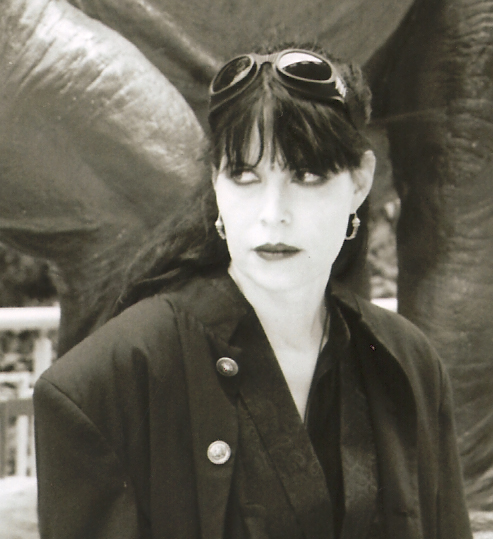

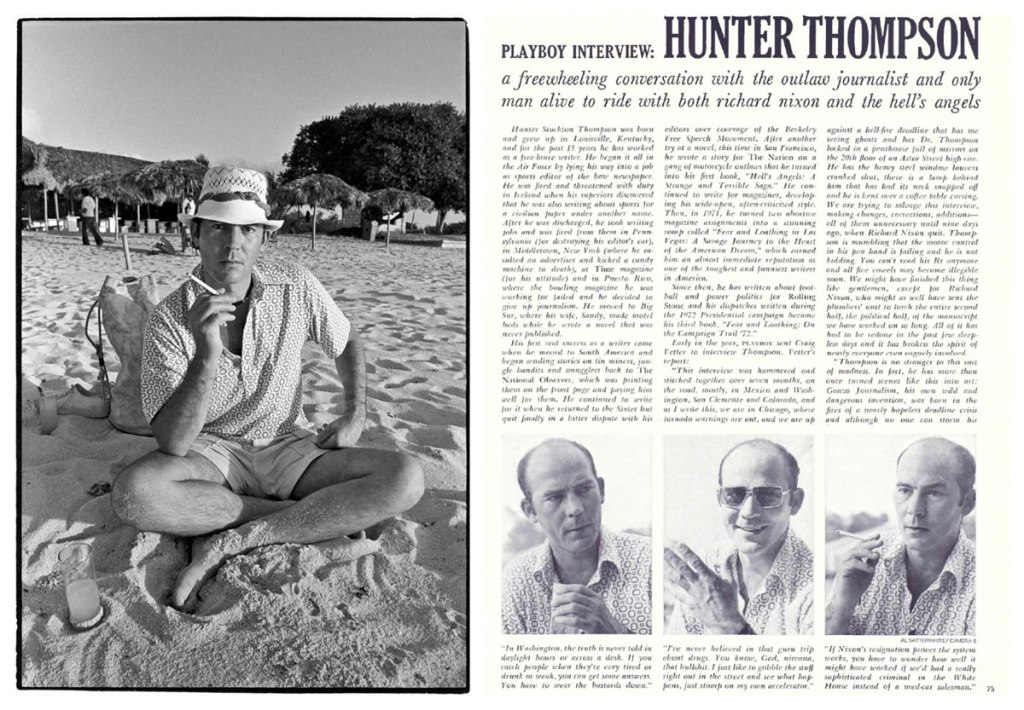















 Horror Sleaze Trash