
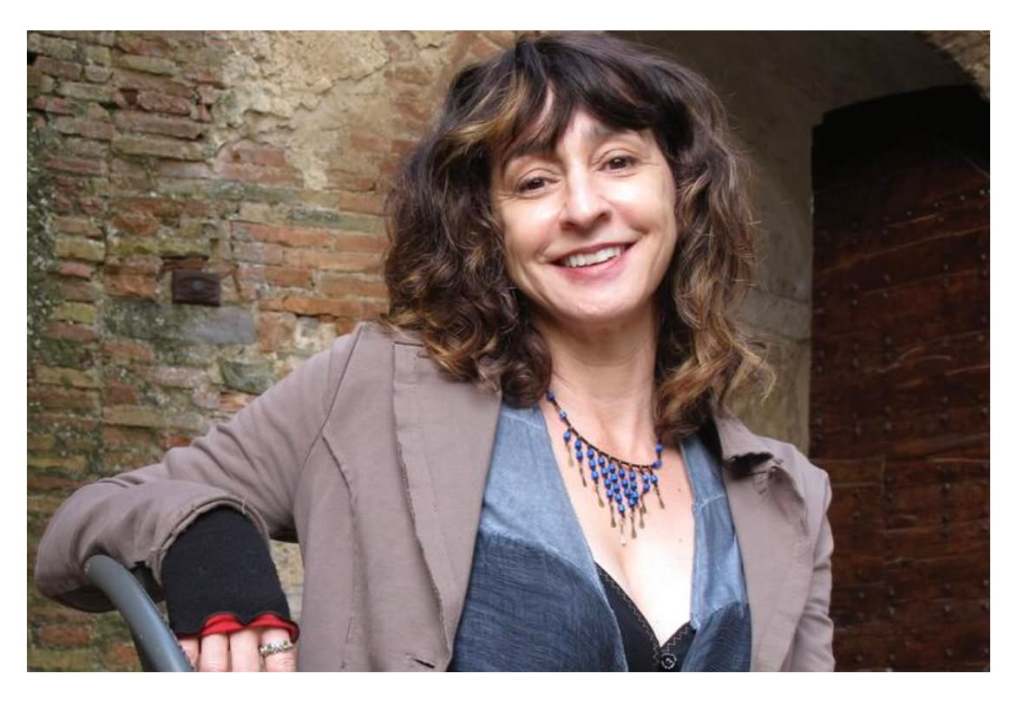
Kim Addonizio has long been one of the most fearless, versatile, and emotionally resonant voices in American literature — a poet, novelist, memoirist, musician, and teacher whose work moves with equal fluency through the ecstatic, the ordinary, and the brutally honest. Her books, from Tell Me to Mortal Trash, from Bukowski in a Sundress to her newest collection Exit Opera, have shaped generations of writers who recognize in her work a rare combination of vulnerability, craft, humor, and unflinching clarity.
In this exclusive interview, Alex S. Johnson speaks with Addonizio about the deep currents that run through her writing life: the hunger that drives form, the shifting terrain of desire, the body’s betrayals and astonishments, the role of imagination in resisting the utilitarian, the long arc of craft, and the wild patience required to sustain a creative life across decades.
What follows is a candid, generous, and wide‑ranging conversation with one of the most vital literary figures of our time — presented here in full, exactly as she spoke it.
ASJ: Dear Kim, thank you again for agreeing to this interview. Your work has been a touchstone for so many of us — not only the poems, but the essays, the fiction, the craft books, the music, the whole restless, shape-shifting body of it. I’m grateful for the chance to speak with you about the deeper currents running through your writing life.
Across collections like Tell Me, Mortal Trash, and Now We’re Getting Somewhere, your poems move with a clarity that feels both fearless and formally precise. When you’re drafting, what internal permission do you give yourself that allows that level of honesty to surface without tipping into confession for its own sake?
KA: I gave myself permission long ago to be as vulnerable and honest as possible and not to worry about what people think. My poems aren’t for everyone, which is fine with me. I dedicated Bukowski in a Sundress to “my tribe.” Poets, artists, thinkers, lovers, dreamers, seekers. People who understand that life is complex and who aren’t afraid of difficult territory. The lost, the shitfaced, the bold and the painfully shy, the bewildered. I think of Neruda’s “Arte Poetica”:
but the truth is that suddenly the wind that lashes my chest,
the nights of infinite substance fallen in my bedroom,
the noise of a day that burns with sacrifice,
ask me mournfully what prophecy there is in me,
and there is a swarm of objects that call without being answered,
and a ceaseless movement, and a bewildered man.
ASJ: You’ve worked in multiple genres — the novel Little Beauties, the story collection The Palace of Illusions, the memoir Bukowski in a Sundress, the craft books Ordinary Genius and The Poet’s Companion (with Dorianne Laux), and of course the poetry. How do you sense which form a particular emotional or narrative impulse belongs to? Does the form announce itself, or do you have to coax it into the right shape?
KA: I’ve published two novels, Little Beauties and My Dreams Out in the Street. I hope I never want to write another one. They’re such a slog, day after day. Maybe one day I’ll become obsessed again–that’s really what it takes–and try to write another (small) one. I’ve also largely abandoned stories, though I’m really proud of The Palace of Illusions. I’m still drawn to writing the personal essay, and am finishing a collection called Anywhere But Me. But poetry is my heart, the thing that makes me happiest, the thing I always want. And yes, the form does announce itself, as a feeling, a hunger, a need. I’m still ravenous for poetry and trying to write something that maybe goes beyond, or in a different direction, from poems I’ve previously written.
ASJ: Bukowski in a Sundress confronts the “outlaw poet” label head-on, along with the gendered assumptions embedded in that lineage. How do you see your relationship to the Bukowski tradition now — not just the man, but the cultural machinery that surrounds him and the writers who get pulled into or pushed out of that orbit?
KA: He’s certainly been widely read, and has gathered a lot of rabid fans along with sniffy detractors. As I wrote in that essay, I haven’t read most of his work. I appreciate that he was a working-class guy writing about people at the margins who struggle and fuck up and rely a little too much on the bottle. My Dreams Out in the Street and my novel-in verse, Jimmy & Rita, are based on the same characters, and they would be at home in Bukowski’s world. While writing both of those, I spent a lot of time with Denis Johnson’s first novel, Angels, as well as William Vollmann’s Whores for Gloria.
ASJ: Many of your poems inhabit the charged space between the ecstatic and the ordinary — the bar, the street, the late-night kitchen table. Do you see the sacred and the profane as opposing forces, or as two expressions of the same human appetite for meaning?
KA: The human appetite for meaning! I love that. Our culture certainly sets those in opposition. Whitman, for one, didn’t. Of course, they’re inextricably part of us. We need to function in the ordinary world, but we’re also drawn to, and require, non-ordinary reality. Imagination. A world without it–fascist regimes have long recognized this–would be reduced to the hell of the purely utilitarian. No music, no dancing, no true erotic expression. Just obedient little consumer units, or outright slaves, screws and bolts and O-rings in the machines that serve the masters.
ASJ: The body — its pleasures, its betrayals, its hungers — is central to your work, from My Black Angel to the more recent poems in Now We’re Getting Somewhere. How has your relationship to the body, both as subject and instrument, evolved over the course of your writing life?
NOTE: Latest book is Exit Opera (W.W. Norton, 2024).
KA: I’m not the same writer at seventy that I was at forty, when my first poetry collection was published. Those were the poems of my twenties and thirties. I’m not obsessed anymore with romantic love, which was a big subject and struggle for me. I’m happier now. Mentoring has become important to me–to give something back, to offer something to newer poets trying to make their way. I take teaching very seriously; it’s truly a vocation, like poetry. And I’m still pretty astonished that I’ve been writing and publishing this long and that my work is still speaking to people.
I guess those remarks aren’t strictly about the body, though it’s clear that hormones are part of how my body, brain, and writing have changed. And aging is a bitch. Once you start really losing people, you get the message of mortality in a much more visceral way. My parents are dead, three of my four brothers are gone, and a friend or two has disappeared. Time and death are more acutely present. Everything about my body is changing. Kind of like puberty! I’m constantly going, WTF! Now this?
ASJ: You’ve written extensively about craft, especially in Ordinary Genius and The Poet’s Companion. How do you balance the unruliness of lived experience with the discipline required to shape it into art? Do you find that craft liberates the material, or contains it?
KA: And now I’m in the process of working on a third book, The Poetic Mind, about craft, creativity, and community, with another poet. I always remind my students that craft is their friend. It’s what helps them get their vision into form. Life is unruly, uncertain, unpredictable, messy, fraught–however hard you may try to control it, you can’t, quite. Same with art, really. But focus, purpose, commitment–those will take you a long way in both. Artists are not people with vague creative yearnings. You may start that way, but if you’re going to get anywhere, you can’t stay in that place. In Ordinary Genius I talk about the Roman concept of serving your genius, which is a sort of tutelary spirit that guides you. Call it divine, or non-ordinary, or an essential self; it’s what you need to serve in order to manifest your desires.
ASJ: Your work often interrogates the stories we tell about ourselves — the myths we inherit, the myths we invent, the myths we eventually outgrow. Looking back across your books, what personal mythologies have you had to dismantle in order to keep writing truthfully?
KA: Wow, I don’t know. I’m not sure I’ve ever thought about a personal mythology. I have been aware of dramatizing the self; I mean, I always want to create some kind of drama in a poem, and there’s a line between that and melodrama I may not have always succeeded in avoiding. The “I” in my poems is me and not-me. I’m trying to inhabit states of feeling, which start as my own but might be tweaked in some way for greater effect. Maybe, anyway, self-presentation is always a kind of myth or story we tell ourselves about who we are.
ASJ: Music threads through your work — not only in your collaborations, but in the sonic architecture of your poems. What role does music play in your writing process, and how consciously do you think about rhythm when you’re composing?
KA: I find it impossible not to think about rhythm. I’ve studied various musical instruments since I was a teenager. First guitar, then voice, then flute, harmonica, and now banjo. In my head, I hear and orchestrate the music of every line. By now it’s innate. I’ve done a couple of word/music albums and will be doing a third with my partner, a professional guitarist. I’m really excited because I’ve created some banjo accompaniment to one poem and I’m going to play flute for another. Plus, this time I’ll also have access to a band for a couple of pieces. I’m definitely an amateur, but I have obsessively worked on some things I can perform without humiliating myself. I tell my students to put their ear down to their lines and listen hard. The music of a poem is one of its great pleasures, for me. But a lot of my students can’t hear their lines; I’m also telling them to tighten, not only for the music, but also the concision a poem can offer.
ASJ: Desire — erotic, intellectual, existential — is a force that runs through your poems and prose. How do you think about desire now, as a writer and as a human being, compared to when you were publishing The Philosopher’s Club and Jimmy & Rita?
KA: Can I say hormones again? A lot of things have calmed down, thank God. I still have plenty of longing, though. When I began, I was so immersed in poetry, and gripped by the powerful need to swallow it whole, to make it my own, and yes, to succeed at it. There was nothing else I really wanted to do with my life, until I found poetry. I was floundering in my twenties, doing a lot of drugs and drinking and hooking up. I didn’t have a lot of faith in myself. I had a lot of childhood trauma to reckon with. I was trying hard to focus on music, but when I found poetry in my late twenties, something profound happened. I can’t quite say it saved me from myself, but it was the beginning of the process. In terms of those first two books, it was of course really gratifying to find a publisher and realize I might actually be able to make my way as a poet in the world. Now that I’m twelve or so books in, it’s easier, of course, to get published (though like everyone I collect my share of rejections); but I’m more confident in myself as an artist, and mostly I want to write new work that feels urgent to me, even if it may not be to others.
ASJ: You’ve mentored countless poets, both directly and through your craft books. What do you wish emerging writers understood about the long arc of a creative life — the part that requires endurance, patience, and a willingness to keep reinventing the self?
KA: Exactly that! I use Adrienne Rich’s phrase: “wild patience.”
ASJ: You’ve lived through multiple literary eras and scenes. What has remained constant in your work, and what has changed in ways that still surprise you?
KA: I’ve grown less attached to narrative, and more interested in surprise. I’ve tried to turn outward more. Not exactly away from the self, but to put the self into a larger context. I’ve interrogated “The Confessional” in various ways–there’s a sequence in Now We’re Getting Somewhere; and while I value it as a mode, I’m a lot more restless in terms of subject matter. I’ve noticed that the new poems I’m writing are still engaged with the personal, but what I see in terms of subject matter are things like the current political shitshow, what’s been called the Sixth Extinction, evolution, ancestors, ancient Greece, the Vikings, war.
ASJ: Finally, who are the poets — past or present — whose work continues to challenge, nourish, or companion you? Are there writers you return to when you need to be reminded why you do this?
KA: I’m not going to name any living contemporary writers, though I’m aways casting around for who is doing interesting work. In fact, I won’t name anyone, because it would probably distort my actual reading habits. Mostly, what inspires me to write lately is anything dealing with history, culture, the environment. I rarely used to read or watch that kind of stuff. It was always personal essays and stories and novels. One day I’ll probably return to all that, but I’ve hardly read a novel since Covid, and the only one I read then was one by Graham Greene. I was able to finish it because it was short, and involved a lot of pink gin.
 Horror Sleaze Trash